

Hage Energy HVAC Summer Survival Guide: Changing the Air Filter
How to Change the Air Filter for Your Residential HVAC Unit
If you live in Houston, TX, your air conditioner isn’t just an appliance—it’s a survival tool. With summer heat that feels like it’s trying to melt the pavement and humidity thick enough to chew, your HVAC system works overtime. And at the heart of that system? A humble, often overlooked hero: your air filter.
Changing your HVAC air filter might not seem like a big deal, but it’s one of the simplest and most important things you can do to protect your comfort, your indoor air quality, and your system’s efficiency. Over time, filters trap dust, pet hair, pollen, mold spores, and debris. That’s great—until they get clogged and block airflow entirely. A neglected filter forces your system to work harder, burns more energy, and can lead to frozen coils, poor airflow, higher utility bills, and even total A/C breakdowns.
So how do you know when it’s time to change it? If your vents feel weak, your allergies are acting up, your electric bill is climbing, or your A/C seems to run nonstop—it’s probably time. For Houston homeowners, especially during high-use months from March through October, we recommend checking your filter every 30 days and replacing it every 30–60 days depending on usage, pets, and household allergies.
This chapter will walk you through exactly how to find, inspect, and replace your HVAC air filter in 8 simple steps—no technical skills required.
https://youtube.com/shorts/nA8Bx0mKe2Y?feature=shareNeed assistance?
Having trouble or have additional hvac concerns or issues? Submit the form below and one of our experts will be in contact to assist you.
8 Steps to changing your HVAC air filter:
Step 1
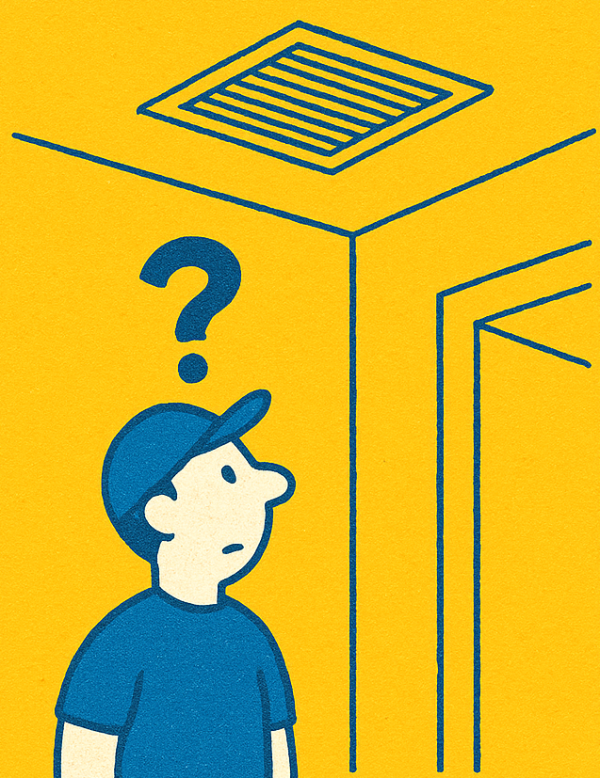
Locate the Air Filter
Step 2
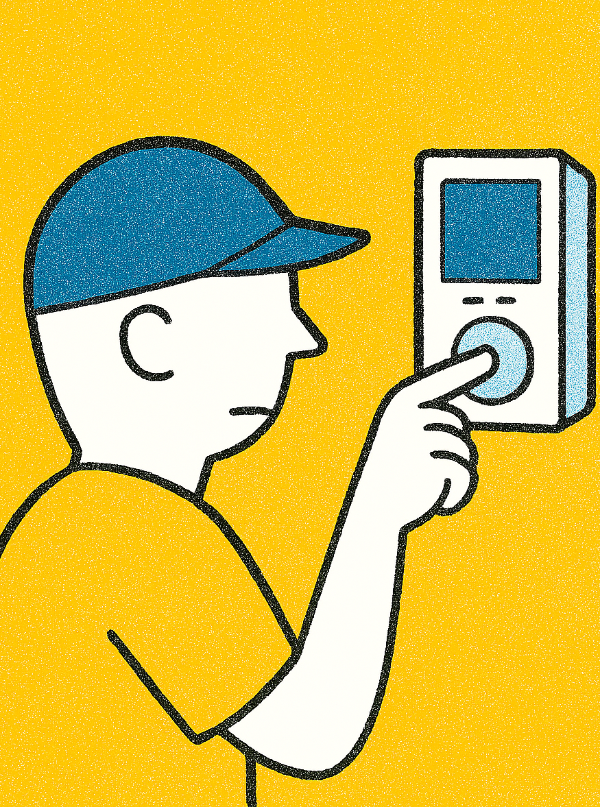
Turn Off the HVAC at the Thermostat
Step 3
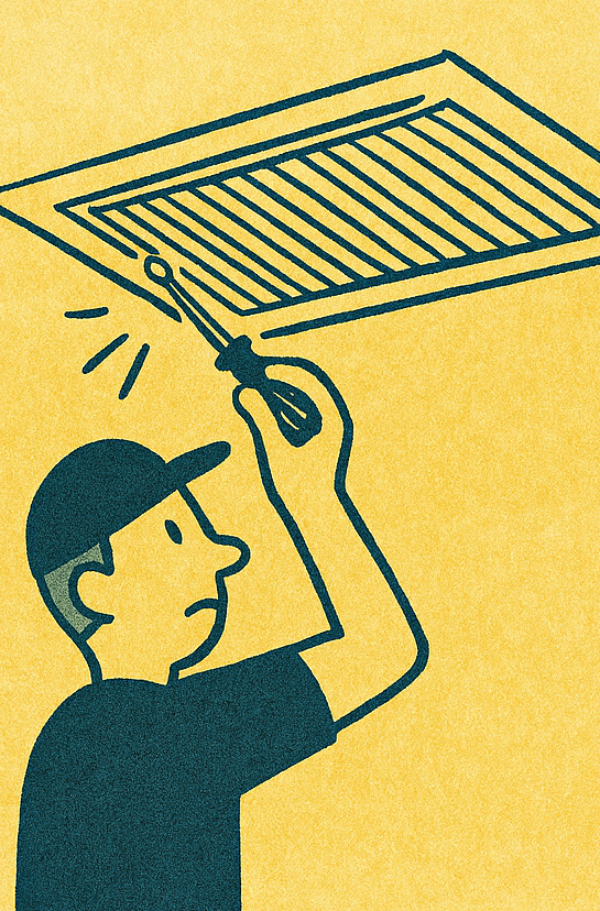
Open the Access Panel or Vent Cover
Step 4
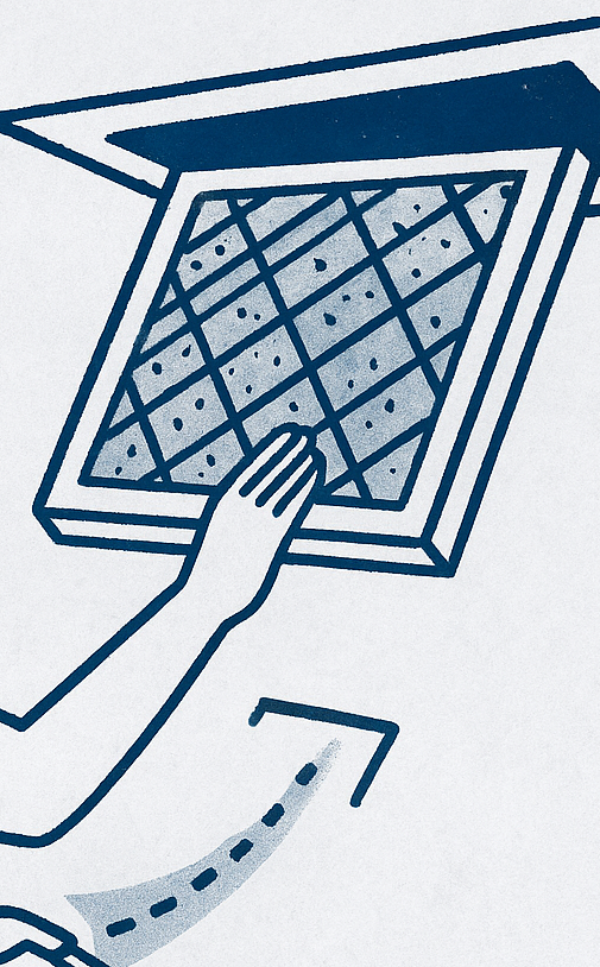
Slide Out the Dirty Filter
Step 5
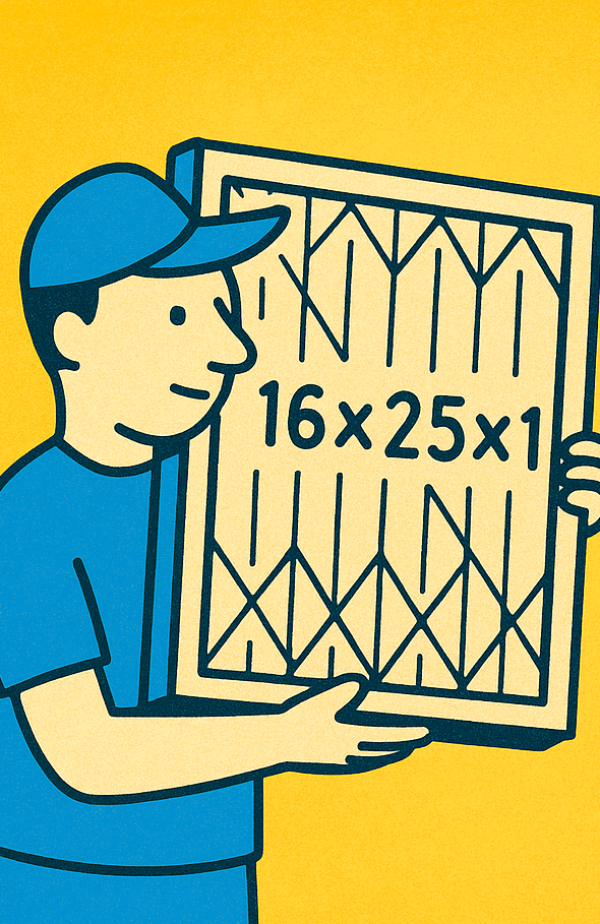
Check the Size and Match a New Filter
Step 6
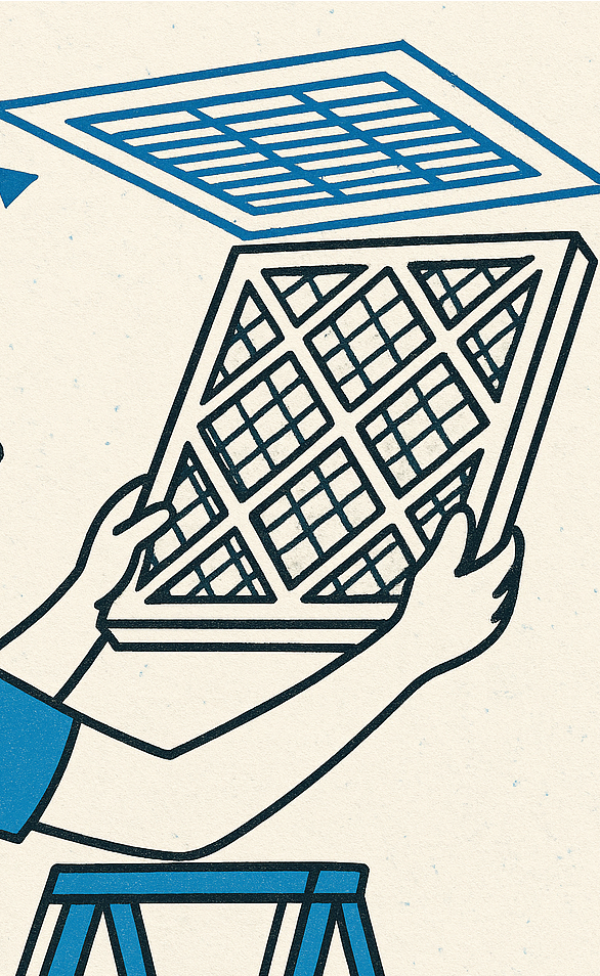
Insert the New Filter
Step 7
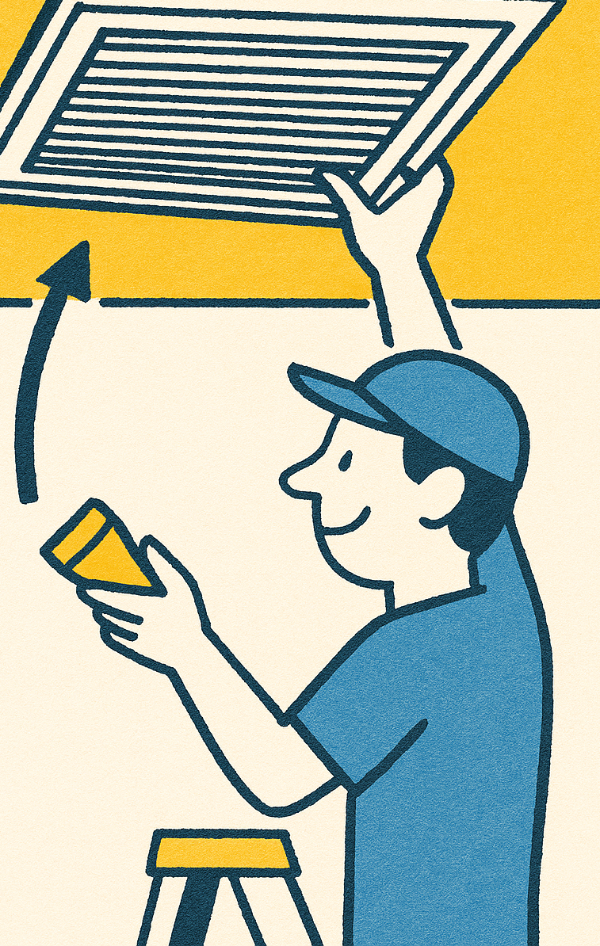
Close the Panel or Grille
Step 8
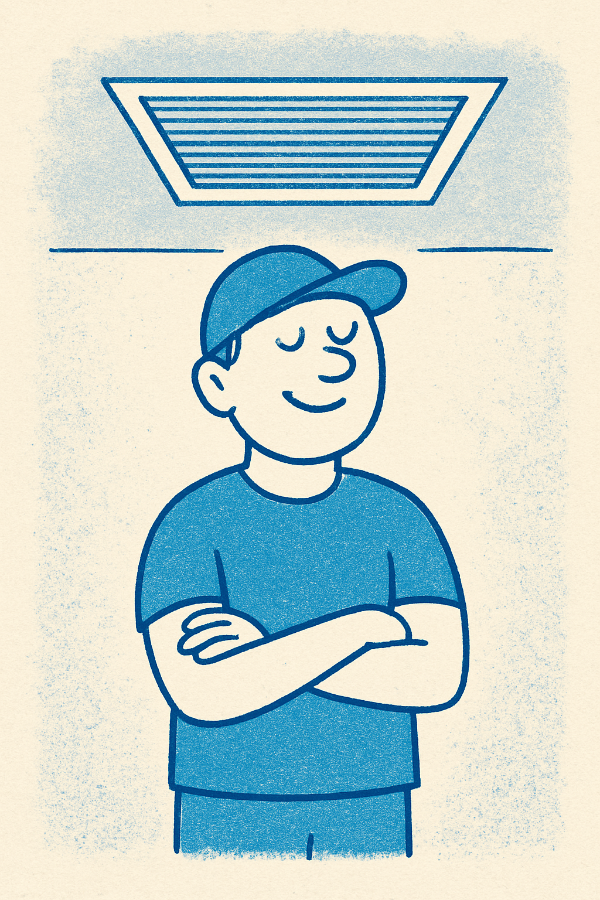
Turn the System Back On and Set a Reminder
Step by Step Instructional:
Step 1: Locate the Air Filter
Your filter could be hiding in a few places: behind a return air grille in the ceiling or wall, inside a hallway vent, or tucked into the air handler unit (often found in a closet or attic). Use a flashlight and look for a removable panel or vent—if you find a dusty rectangle peeking out, you’ve found it.
Step 2: Turn Off the HVAC at the Thermostat
Before you do anything else, go to your thermostat and turn the system off. This keeps the fan from pulling air (and dust) through the duct while you’re working—and helps avoid unfiltered air blowing into the home mid-swap.Step 3: Open the Access Panel or Vent Cover
Carefully remove the cover or panel by unscrewing it or releasing the latch. You may need a standard screwdriver. Be gentle to avoid bending the metal or cracking plastic panels—some vents haven’t been opened in a while.Step 4: Slide Out the Dirty Filter
Slowly slide out the old filter. If it’s covered in gray dust, hair, or fuzz and you can’t see light through it—congrats, it’s overdue! Hold it up to a light source to check transparency. If it looks like a lint trap from a dryer, it’s doing its job… and now it’s done.Step 5: Check the Size and Match a New Filter
Before tossing the old filter, look for the size printed on its frame—something like “16x25x1.” Also, take note of the airflow arrow printed on the side; you’ll want to match that direction when inserting the new one. Buy the same size filter from your local store or HVAC supplier.Step 6: Insert the New Filter
Slide the new filter into the same slot, with the airflow arrow pointing toward the HVAC unit or duct. It should fit snugly without bending or forcing it in. If it’s loose or falls out, double-check the size.Step 7: Close the Panel or Grille
Once the new filter is in place, secure the cover or grille with screws or clips. Make sure it’s flush and sealed to prevent gaps where air might bypass the filter.Step 8: Turn the System Back On and Set a Reminder
Head back to the thermostat and switch your system to COOL. Listen for the fan to kick back on and enjoy that cleaner, cooler air. While you’re at it, set a calendar reminder or write the date on the filter’s edge—you’ll want to repeat this every 30–60 days in Houston.You did it!
Need assistance?
Having trouble or have additional hvac concerns or issues? Submit the form below and one of our experts will be in contact to assist you.
Frequently Asked Questions
How often should I change my HVAC air filter in Houston, TX?
In peak cooling months, check your filter every 30 days and replace it every 30–60 days depending on usage, pets, and dust. During low-usage months, 60–90 days may be fine.
What are the signs my air filter needs changing?
Watch for weak airflow, more dust in your home, higher energy bills, allergy symptoms, and a system that runs longer than usual.
Where do I find my HVAC air filter?
Common locations include ceiling or wall return vents, or inside your air handler located in an attic, closet, or garage.
How do I know what size filter to buy?
Check the edge of your existing filter for printed dimensions (e.g., 16x25x1). If not visible, measure the opening or consult your system manual.
Does the arrow on the filter matter?
Yes! The arrow indicates airflow direction. Always point it toward the HVAC unit or ductwork—not into the room.
What happens if I don’t change the filter regularly?
A clogged filter can lead to poor air circulation, frozen coils, higher bills, system damage, and even complete A/C failure.
Which type of filter should I use—fiberglass, pleated, or high-MERV?
Pleated filters offer the best balance of airflow and filtration for most homes. High-MERV filters can restrict airflow if your system isn’t rated for them. Ask Hage Energy for recommendations.
Can Hage Energy replace my filters for me?
Yes! Our maintenance plans include filter inspections and replacements at no extra charge. We'll keep your system clean and efficient—no ladders required.