

Why Is My Air Vent Dripping Water?
Hage Energy
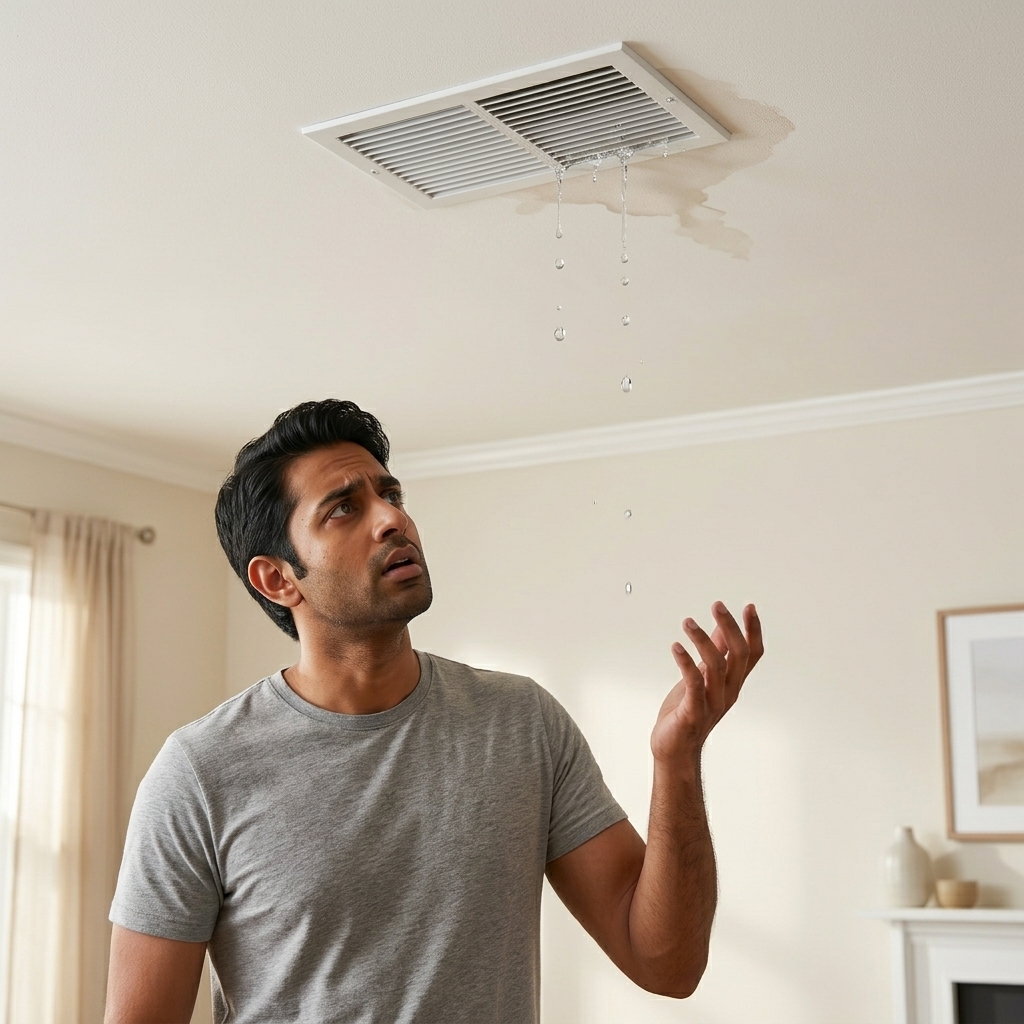
That drip from your air vent isn't rain, it's your AC telling you something's wrong.
Water dripping from a vent is one of the most common calls we get from Houston homeowners, especially once summer hits and the system starts running nonstop. Most of the time it's fixable. But leave it alone and you're looking at water damage, mold, and eventually a system that quits on you in the middle of August.
Here's what's going on and what to do about it.
Why Your Vent Is Dripping: The Short Answer
Your AC does two things: it cools your home and pulls moisture out of the air. In Houston, the moisture part is a serious workload. As warm, humid air passes over the evaporator coil, condensation drips off the coil and into a drain pan below it. From there, it exits through a condensate drain line.
When something interrupts that process, water ends up where it doesn't belong, including out of your vent.
What's Causing It
Clogged condensate drain line
This is the call we get most often. Algae, mold, and debris collect inside the drain line over time until it's completely blocked. Water backs up, the drain pan fills, and it overflows. Houston's humidity speeds this up and some systems clog within a single season if they haven't been serviced.
Dirty air filter
A filter that's packed with dust chokes airflow across the evaporator coil. The coil gets too cold, freezes over, and then when the system cycles off, all that ice melts at once; more water than the pan is built to handle. If the drip only shows up after the AC shuts off, a frozen coil is likely the reason.
Cracked or damaged drain pan
Drain pans wear out, especially in older systems. A hairline crack is enough to let water through. If the drain line is clear but water is still getting out, the pan is worth checking.
Low refrigerant
Low refrigerant drops the coil temperature the same way a dirty filter does: it freezes, then floods when it thaws. The difference is that low refrigerant means there's a leak somewhere in the system. That's not a filter swap; it needs a technician.
Two Things to Check Before You Call
Look at your air filter first. If it's gray and matted, replace it and shut the system off for about an hour to let any ice melt off the coil.
Check the drain pan, usually accessible near the indoor air handler. If it's sitting full of water, the drain line is blocked.
After that, call us. Flushing a drain line the wrong way, handling refrigerant, or swapping out a pan are jobs where a mistake makes things worse.
Why Houston Makes This Harder
Humid climates put more strain on the drainage side of your system than most homeowners realize. Your AC pulls a lot of water out of Houston's air every single day; more than systems in drier parts of the country ever deal with. That means drain lines fill faster, pans fill faster, and a small problem becomes a big one faster.
A dripping vent that gets ignored can turn into ceiling damage, rotted drywall, and mold behind your walls. None of that is cheap.
The Best Fix Is Catching It Early
Routine maintenance clears drain lines before they back up. A tune-up from Hage Energy covers the condensate drain line, drain pan, evaporator coil, refrigerant levels, and filter: everything that feeds into this problem.
Don't wait for the ceiling stain to show up. Call Hage Energy today and we'll get your system cleaned out and running right before the heat peaks. Same-day appointments available in Houston and the surrounding area.