

Why Houston Homes Feel Hotter Before Summer: Humidity, Airflow, and AC Performance
Feeling hot before summer even starts? It might not be your thermostat. Learn why humidity and airflow make Houston homes feel stuffy and uncomfortable.
Hage Energy
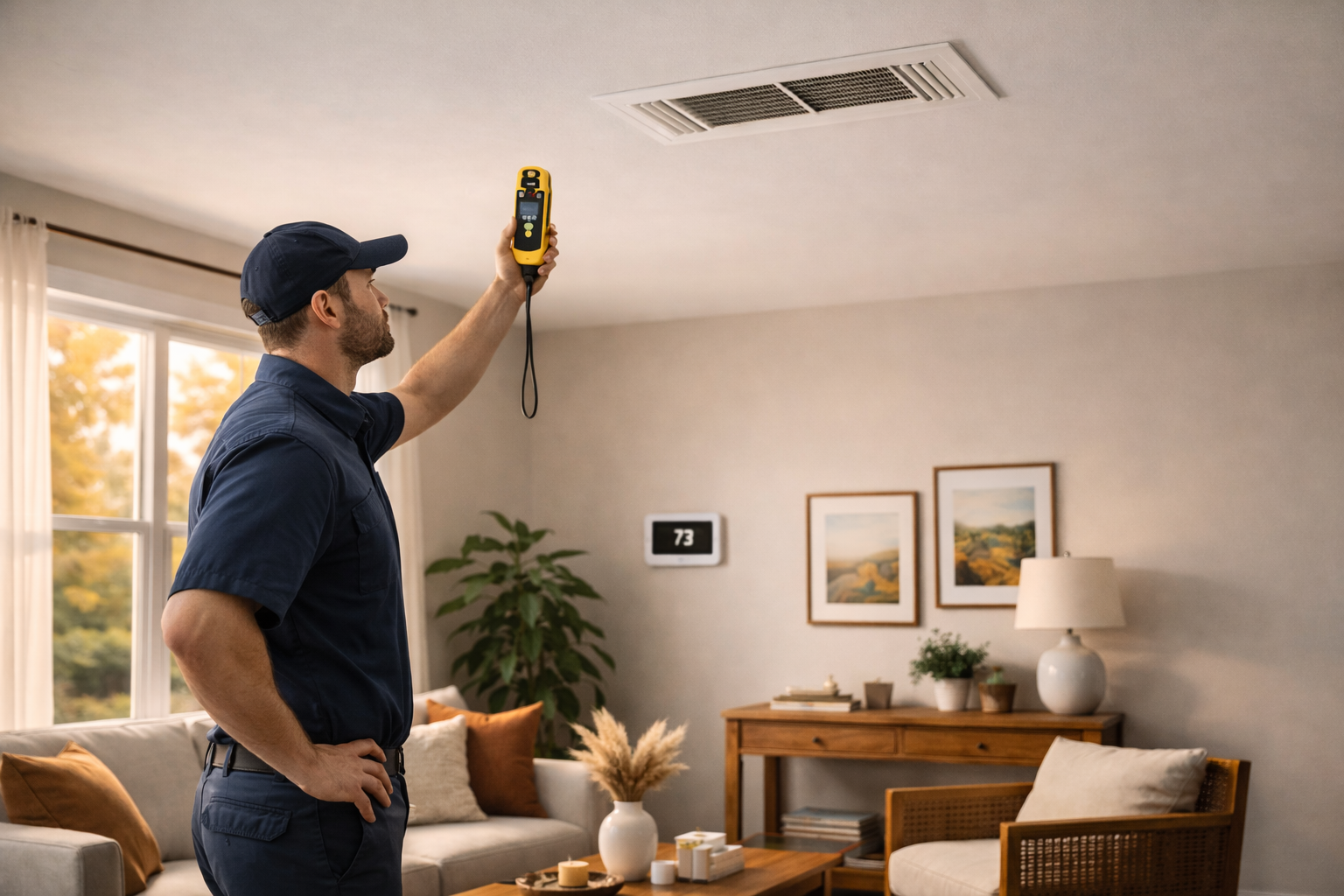
A lot of Houston homeowners notice the same thing every year: summer is not fully here yet, but the house already feels warmer, heavier, or harder to cool. The thermostat may say one thing, but the rooms feel stuffy. The air feels sticky. Upstairs feels uncomfortable earlier in the day. Certain areas never seem to catch up.
That early-season discomfort is real, and it does not always mean your AC has completely failed. In many cases, it is the result of humidity, airflow issues, rising heat load, or a system that is technically operating but not performing as efficiently as it should.
Humidity Changes the Way Comfort Feels
One of the biggest reasons Houston homes feel hotter before peak summer is humidity. Even when the thermostat setting has not changed much, indoor air can feel warmer and more uncomfortable when moisture levels rise. The result is that heavy, sticky feeling that makes a home feel less comfortable than the temperature alone would suggest.
This is especially noticeable in homes where the system is running longer, airflow is uneven, or indoor moisture is not being managed well. Homeowners sometimes respond by lowering the thermostat more and more, but that does not always solve the real problem.
Your AC Can Be Running Without Truly Keeping Up
A lot of homeowners assume that if the AC turns on, the system must be fine. But there is a big difference between an AC that runs and an AC that is performing well. A system may still cool somewhat while dealing with restricted airflow, declining efficiency, dirty components, or wear that becomes more obvious as the season changes.
That is why early-season discomfort is important. It is often the first sign that the system needs maintenance or that a larger comfort issue is beginning to show up.
Airflow Problems Often Hide in Plain Sight
Weak airflow is one of the most common comfort complaints in residential HVAC. Sometimes it is obvious, like a room that never cools properly. Other times it is subtle: the home just feels less balanced than it used to.
Airflow problems may show up as:
- Hot and cold rooms
- Weak air at vents
- Longer cooling cycles
- Rooms upstairs staying warmer
- A home that feels muggy even when the AC is on
If these issues keep happening, it may be time to look deeper than the thermostat setting alone.
Attic Heat and Insulation Play a Bigger Role Than Many Homeowners Realize
As outdoor temperatures rise, attic temperatures can rise even faster. If insulation is underperforming or the attic is pushing excess heat downward, your AC has to work harder to maintain the same indoor comfort. In those cases, the house may feel hotter before summer even fully arrives because the building itself is already taking on more heat.
That is why comfort problems are not always just HVAC equipment problems. Sometimes the house itself is making cooling harder than it needs to be.
Uneven Temperatures Are a Clue
If one room feels fine but another feels stuffy, that is useful information. Uneven temperatures can point to airflow restrictions, duct issues, insulation problems, solar heat gain, or a system that is beginning to struggle under increased seasonal demand.
In Houston homes, these patterns often show up first in upstairs rooms, bonus rooms, west-facing rooms, or spaces farther from the thermostat. That does not automatically mean something major is wrong, but it does mean your comfort problem probably deserves more than guesswork.
Why the Problem Often Shows Up Before Peak Summer
Homeowners sometimes wonder why these issues appear in spring or early summer instead of only during the hottest days. The answer is simple: this is when the system starts transitioning into longer and heavier runtime. Small issues that were easy to ignore in milder weather begin to show themselves once cooling demand increases.
That is also why a spring tune-up can be so valuable. It gives you a chance to address smaller issues before your system is pushed to its limit.
What Houston Homeowners Can Do Next
If your home already feels hotter than it should, here are the best next steps:
- Replace the air filter if needed
- Check for weak airflow in problem rooms
- Make sure vents are open and unobstructed
- Clear debris around the outdoor unit
- Pay attention to humidity and uneven temperatures
- Schedule professional AC maintenance
- Consider a larger home-performance evaluation if comfort issues continue
For homeowners with repeat comfort complaints, high utility bills, or a house that never seems to cool evenly, a whole-home approach may reveal problems maintenance alone cannot fully solve.
When It May Be Time for Repair Instead of Maintenance
Sometimes the issue is no longer just preventative. If your AC is blowing warm air, freezing up, short cycling, or failing to cool the home at all, repair may be the right next step.
The sooner you address those issues, the better your chances of avoiding more serious performance problems during peak summer weather.
Final Takeaway
If your Houston home feels hotter before summer, you are not imagining it. Humidity, airflow, attic heat, insulation gaps, and declining AC performance can all show up early and make a house feel uncomfortable long before the most extreme temperatures arrive.
The good news is that early discomfort is also an opportunity. It gives you time to address the issue before the longest, hottest stretch of the cooling season puts even more pressure on your home and system.
Book service with Hage Energy to evaluate airflow, AC performance, and whole-home comfort before summer reaches full strength.
FAQ Context
Why does my Houston home feel hot even if the AC is running?
An air conditioner can run without performing efficiently. Issues like restricted airflow, declining efficiency, or dirty components can prevent your home from cooling properly, even when the system is on.
What are common signs of an airflow problem in a home?
Common signs of poor airflow include hot and cold spots, weak air from vents, longer cooling cycles, warmer upstairs rooms, and a general muggy feeling even when the air conditioner is operating.