

Breathe Easier: A Complete Comparison of HVAC Air Quality Solutions
Hage Energy
Not all air quality upgrades are created equal, here's how filters, media filters, UV lights, air purifiers, and air scrubbers stack up.
Your HVAC system does more than heat and cool your home, it's the lungs of your building, constantly circulating the air your family breathes. But standard systems leave a lot on the table when it comes to indoor air quality. Whether you're dealing with allergies, odors, mold concerns, or just want cleaner air, there's a growing menu of options to choose from. Here's what you need to know about each one.
Standard Air Filters
The baseline — every system has one
Most Affordable
Standard 1-inch air filters are the entry point for every forced-air system. Rated on the MERV scale (Minimum Efficiency Reporting Value), they range from basic fiberglass panels (MERV 1–4) that catch large dust and debris, to pleated filters (MERV 8–12) that trap pollen, pet dander, and mold spores. A MERV 11–13 pleated filter is often considered the sweet spot for most homes, good enough to help allergy sufferers without restricting airflow.
The catch: standard filters only clean air when the blower is running, and they do nothing for gases, odors, or ultra-fine particles. They also need to be changed every 1–3 months or they become a restriction, and a breeding ground for the contaminants they trap.
Best for: dust, pollen, pet dander
Maintenance: replace every 1-3 months
Limitation: No gas/odor removal
Media Filters
Whole-home filtration that lasts
Best All-Around Filter
Media filters are the grown-up version of a standard filter. Typically 4–5 inches thick and installed in a dedicated cabinet on your HVAC unit, they offer MERV 10–16 filtration with dramatically more surface area. That means they catch finer particles, including bacteria, fine dust, and some virus carriers, while only needing replacement twice a year.
Because they're so dense, they actually flow more freely than a clogged 1-inch filter, which means less strain on your blower motor. If you're looking for a serious upgrade to your filtration without adding electronics or chemicals to your system, a media filter is often the first recommendation from HVAC professionals.
Best for: Fine particles, allergens, bacteria
Maintenance: Replace every 6 months
Limitation: Requires cabinet install
UV Germicidal Lights
Kill what filters can't catch
Best for Mold & Germs
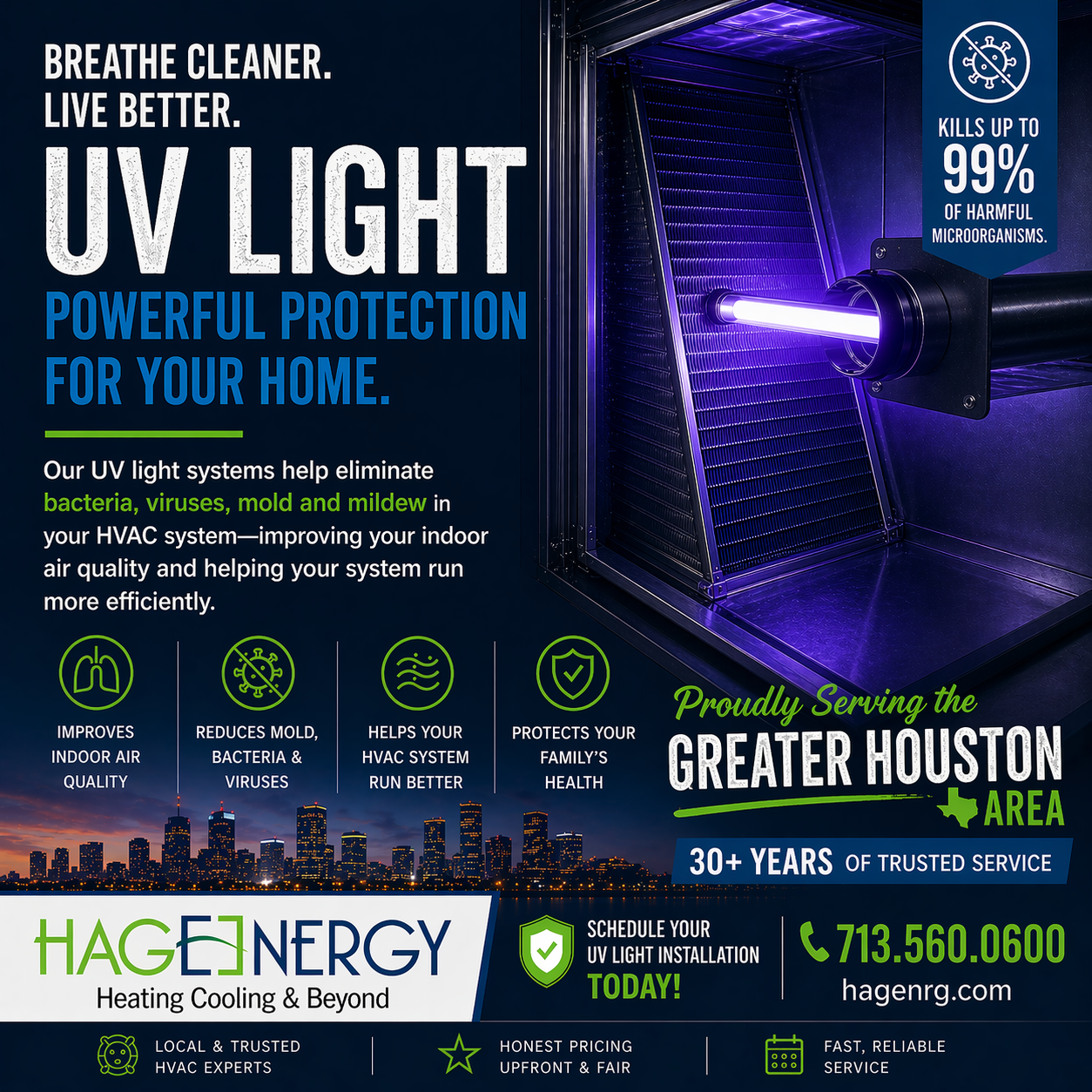
UV-C germicidal lights don't filter air, they destroy microorganisms at the DNA level. Installed inside your HVAC system, they typically target one of two locations: the evaporator coil (where mold and bacteria love to grow in the dark, damp environment) or the return air duct (where passing air is exposed to the UV light).
Coil sterilization lights run continuously and are highly effective at preventing mold buildup that would otherwise recirculate throughout your home. Air sterilization systems work on moving air and are better suited for reducing airborne pathogens. Neither type removes particles, they work best when paired with a quality filter.
Best for: Mold, bacteria, viruses
Maintenance: Bulb replacement yearly
Limitation: No particle or odor removal
Whole-Home Air Purifiers
Electronic filtration for the entire system
Most Comprehensive
Whole-home air purifiers go beyond mechanical filtration by adding electronic or chemical processes to the mix. Technologies include electronic air cleaners (which electrically charge particles so they stick to collection plates), bipolar ionization (which releases ions that cluster pollutants together for easier capture), and photocatalytic oxidation (PCO), which uses UV light and a titanium dioxide catalyst to break down VOCs, odors, and organic compounds at the molecular level.
These systems treat every cubic foot of air in your home, not just what passes through a filter at a given moment. Premium models from brands like Dust Free and APCO handle particles, pathogens, odors, and VOCs in a single unit. They're the closest thing to a comprehensive indoor air quality solution in one box.
Best for: Particles, odors, VOCs, pathogens
Maintenance: Plates cleaned / cell replaced annually
Limitation: Higher upfront cost
Air Scrubbers
Active purification — surfaces and air
Most Powerful
Air scrubbers, most notably the Air Scrubber by ActivePure, take a different approach entirely. Rather than waiting for air to pass through the system, they actively send purifying agents (charged ions or hydrogen peroxide plasma) out into the living spaces of your home, where they attack pollutants on surfaces, countertops, and in the air simultaneously.
Originally developed with NASA technology for use on the International Space Station, air scrubbers are particularly effective for homes dealing with heavy contamination; smoke damage, chemical odors, or severe mold remediation. Studies have shown reductions of 99%+ in certain airborne contaminants. They're the most aggressive IAQ solution available for residential HVAC and are often used in commercial settings, medical offices, and post-remediation situations.
Best for: Heavy contamination, smoke, mold
Maintenance: Cell replacement every 2 years
Limitation: Premium price; ozone considerations
The Bottom Line
For most homeowners, the best strategy is layered: start with a quality media filter as your foundation, add a UV coil light to protect against mold, and consider a whole-home purifier if you have allergy sufferers or pets. Air scrubbers are worth the investment for certain situations; heavy smokers, post-remediation, or immune-compromised household members. No single product does everything; the best indoor air quality comes from combining solutions that address your specific concerns.
If you're not sure where to start, Hage Energy can perform an air quality assessment and recommend a package based on your home's size, your existing equipment, and your family's needs. The right combination of solutions can make a measurable difference, not just in air quality readings, but in how your home feels every day.