

Affordable AC Repair in Houston: Costs, Common Fixes and Ways to Save
Don't sweat AC repair costs in Houston. Our guide breaks down common fixes and pricing factors to help you make a smart, affordable choice for your home.
Hage Energy
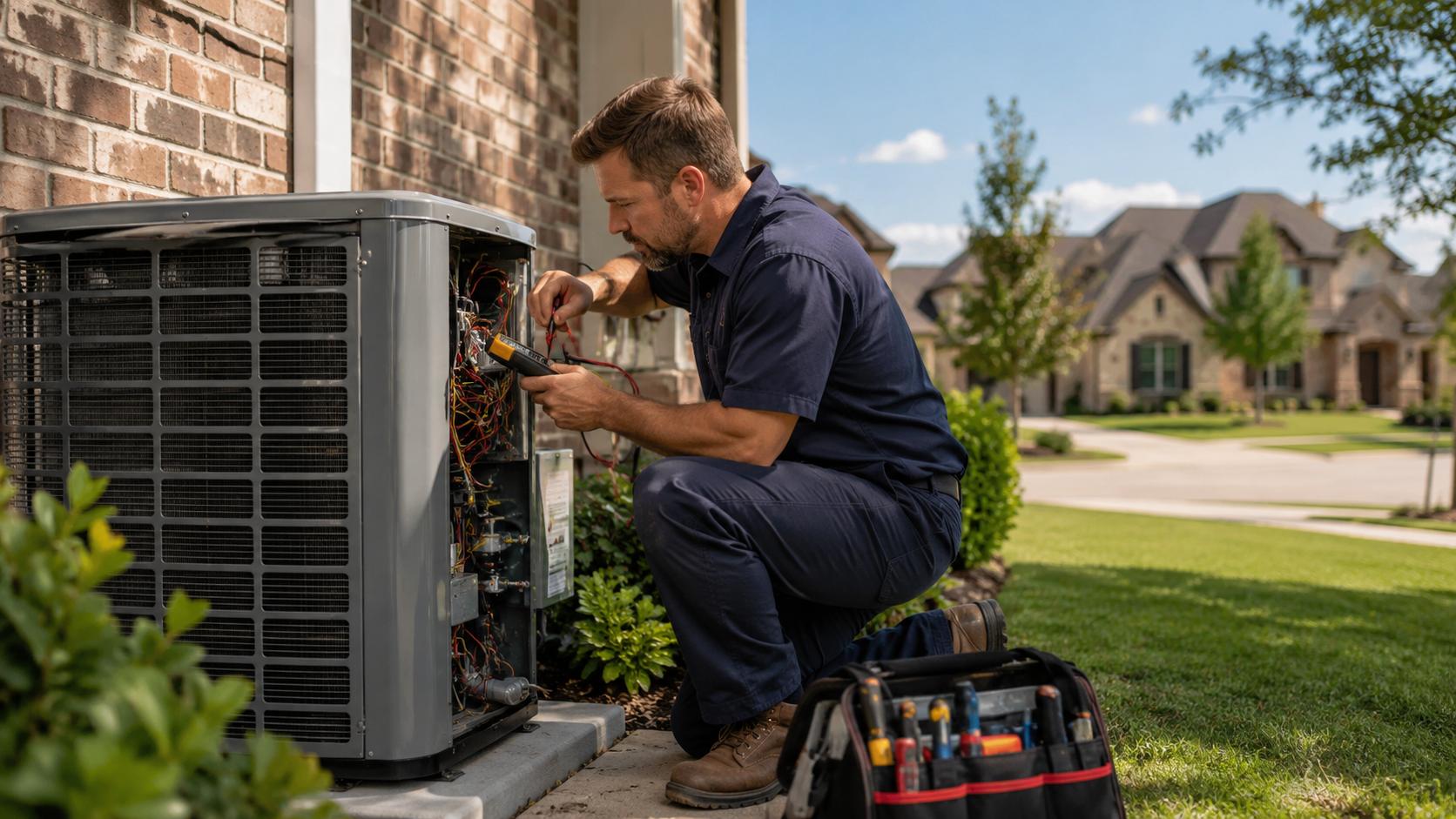
When an air conditioner fails in Houston, homeowners usually have two immediate questions: What is wrong with the AC, and how much will it cost to fix?
A responsible AC repair price begins with an accurate diagnosis. Warm air, weak airflow, a blank thermostat, a frozen coil, a tripped breaker, and an outdoor unit that will not start can each have several possible causes. Quoting a repair before testing the system can create inaccurate expectations and may lead to unnecessary work.
This guide explains what affects AC repair costs in Houston, which air conditioning fixes may be more affordable, when a repair becomes more substantial, and how to compare AC repair with system replacement.
If your air conditioner is not working, call Hage Energy at 713-560-0600 or schedule Houston AC repair online.
What Does AC Repair Cost in Houston?
There is no single price for air conditioning repair. The total cost depends on the failed component, equipment design, labor, accessibility, refrigerant type, warranty coverage, parts availability, service timing, and whether additional problems are discovered.
An AC repair may fall into one of three general categories:
- Lower-complexity air conditioning fixes
- Component-level AC repairs
- Major cooling-system repairs
The only reliable way to determine which category applies is to inspect and test the system.
Lower-Complexity AC Fixes
Some cooling problems involve a relatively accessible control, maintenance, drainage, or operating issue.
Examples may include:
- Incorrect thermostat settings
- Dead thermostat batteries
- A clogged air filter
- A blocked condensate line
- A minor electrical connection problem
- A replaceable control or safety component
- Debris restricting airflow around the outdoor unit
- A basic thermostat replacement
- Routine cleaning required after diagnosis
A simple symptom does not always mean a simple repair. For example, a condensate float switch may shut the system down because of a clogged drain, frozen coil, cracked drain pan, failed condensate pump, or drainage installation problem.
Component-Level AC Repairs
Many air conditioner repairs involve replacing or correcting a specific mechanical, electrical, control, airflow, or drainage component.
Examples include:
- Capacitor replacement
- Contactor replacement
- Relay replacement
- Transformer replacement
- Thermostat replacement
- Blower component repair
- Condenser fan motor replacement
- Condensate pump repair
- Control board replacement
- Damaged wiring repair
- Accessible refrigerant leak repair
- Duct repair
- Motor or control-module replacement
The cost of these repairs depends on the exact part, equipment model, installation location, labor required, warranty coverage, and testing needed after installation.
Major Air Conditioning Repairs
More substantial AC repairs may involve major refrigeration components, difficult access, multiple failures, or older equipment with limited parts availability.
Examples include:
- Compressor replacement
- Evaporator coil replacement
- Condenser coil replacement
- Extensive refrigerant leak repair
- Difficult-to-access refrigerant line repair
- Multiple failed electrical or mechanical components
- Obsolete or unavailable replacement parts
- Significant duct replacement
- Damage following an electrical surge or storm
- Major problems affecting an older air conditioning system
When a major component fails, it is reasonable to compare the repair cost with the cost and long-term value of replacing the air conditioner.
Why AC Repair Prices Vary
The Diagnosis
“AC not cooling” is a symptom, not a specific repair. A failed capacitor and a failed compressor can initially seem similar because both may prevent the outdoor unit from starting.
Testing protects you from replacing the wrong component and paying for work that does not solve the problem.
Equipment Make, Model, and Design
Parts, motors, compressors, refrigerants, controls, and access requirements differ by manufacturer and model. Variable-speed, inverter-driven, and communicating systems may use specialized components that differ from standard single-stage equipment.
Part Availability
A common replacement part may be readily available. A proprietary, older, discontinued, or back-ordered component may cost more or require additional time to obtain.
Refrigerant Type and Leak Location
Refrigerant repair costs depend on:
- The refrigerant used by the system
- The amount of refrigerant required
- The location of the leak
- Whether the leaking component can be repaired
- Whether a coil or line must be replaced
- The procedures needed to evacuate, test, and recharge the system
Adding refrigerant without addressing a known leak may provide only temporary cooling and may increase the total cost over time.
Equipment Accessibility
Equipment installed in a tight attic, difficult mechanical closet, roof location, or obstructed outdoor area may require more labor than equipment that is easily accessible.
Houston attic conditions can also make certain repairs more demanding during periods of extreme heat.
Warranty Coverage
A manufacturer parts warranty may cover the replacement component but not the diagnostic visit, labor, refrigerant, shipping, or related repair work.
Warranty eligibility may also depend on equipment registration, installation records, maintenance history, and the specific terms of the manufacturer’s warranty.
Standard Versus Emergency AC Service
After-hours, weekend, holiday, or emergency air conditioning service may involve different charges than a standard appointment.
Ask what diagnostic, emergency, or after-hours charges apply when scheduling service.
Additional System Problems
A failed component may be the immediate cause of the breakdown, while other conditions also reduce performance.
These may include:
- Dirty indoor or outdoor coils
- Clogged condensate drains
- Weak electrical connections
- Restricted air filters
- Duct leakage
- Poor airflow
- Insulation deficiencies
- Thermostat problems
A complete diagnosis should separate the repair required to restore operation from optional improvements that may support comfort, reliability, or energy efficiency.
Affordable AC Repair Is Not Always the Cheapest Advertised Repair
A low advertised service price is not automatically the lowest total cost.
An incomplete or rushed repair can lead to:
- A second breakdown
- Repeated diagnostic charges
- Replacement of parts that were not faulty
- Compressor or motor damage
- Continued refrigerant leakage
- Water damage from an unresolved drain problem
- High energy bills caused by poor airflow or duct leakage
- Lost warranty protection
- Premature system replacement
Affordable AC repair should mean that the actual problem is identified, the options are explained, the approved repair is completed properly, and the system is tested afterward.
A dependable repair process should include:
- Diagnosing the actual cause
- Explaining the failed component
- Separating required work from optional recommendations
- Comparing repair and replacement when appropriate
- Testing the system after the repair
- Explaining applicable warranty considerations
- Providing maintenance recommendations when relevant
Questions to Ask Before Approving an AC Repair
- What test identified the failed component?
- What caused the component to fail, if known?
- Is this repair required to restore operation?
- Are any recommendations optional or preventive?
- Is the component covered by a manufacturer warranty?
- Does the repair include labor and post-repair testing?
- Will refrigerant be required?
- Is there evidence of a refrigerant leak?
- Are additional failures likely because of the system’s age or condition?
- Would replacement provide better long-term value?
- Are financing options available?
- Is maintenance recommended after the repair?
Clear answers help you compare value rather than choosing solely by the lowest initial price.
Can You Fix an AC Yourself to Save Money?
Homeowners can safely complete a few basic checks before requesting air conditioning repair.
You can:
- Confirm that the thermostat is set to Cool
- Set the temperature below the current room temperature
- Replace a visibly dirty air filter
- Confirm that vents and return grilles are open
- Check the circuit breaker once
- Remove loose debris from around the outdoor unit
- Look for visible ice or water
- Listen for unusual sounds
- Note unusual odors
Stop and call a professional when the problem involves:
- Electrical panels
- Capacitors
- Contactors
- Motors
- Refrigerant
- Sealed-system components
- Internal wiring
- Control boards
- Repeated breaker trips
- Smoke, sparks, or burning odors
Attempting a high-voltage or refrigerant repair without proper training and tools can create a serious safety risk, damage the equipment, and increase the final repair cost.
Repair or Replace: Which Option Is More Affordable?
Repair is often the economical choice when the system is otherwise in good condition and the problem involves one repairable component.
Repair May Make Sense When:
- The system is otherwise in good condition
- The problem involves one accessible component
- The equipment has not required repeated repairs
- Replacement parts are readily available
- A useful manufacturer warranty remains
- Comfort was acceptable before the failure
- Energy performance was acceptable before the failure
- The repair cost is reasonable relative to the system’s condition
Replacement May Deserve Consideration When:
- The air conditioner is more than 10 years old
- Repairs are becoming frequent
- A compressor or major coil has failed
- The system uses aging or difficult-to-source components
- The equipment does not control Houston humidity properly
- Cooling bills continue to rise
- Several rooms remain uncomfortable
- The air conditioner is improperly sized
- The ductwork and equipment both require major work
- The repair would consume a substantial portion of the replacement cost
A minor repair on an older system may still be worthwhile. A major repair on the same system may require a more detailed comparison of expected remaining life, energy use, comfort, warranty coverage, and future repair risk.
Consider the Cost of Repeated Repairs
A repair that restores several more years of dependable operation can be a sound investment. A repair followed by another major failure a few months later may not be.
Before approving a major repair, review:
- The system’s repair history during the last two years
- The age of the equipment
- Current part availability
- Existing warranty coverage
- The refrigerant used by the system
- The condition of the compressor
- The condition of the indoor and outdoor coils
- Whether the indoor and outdoor equipment are properly matched
- The condition of the ductwork
- Monthly energy use
- Indoor humidity levels
- Room-to-room comfort
Hage Energy can evaluate the immediate AC failure and explain whether the rest of the system appears suitable for continued service.
Common Affordable AC Fixes
Some of the most common air conditioning repairs involve electrical, airflow, drainage, thermostat, or control components. The exact repair still depends on testing.
Capacitor Replacement
A failed capacitor may prevent a fan motor or compressor from starting correctly. Symptoms can include humming, delayed startup, an outdoor fan that does not spin, or an AC system that stops cooling.
Capacitors store electrical energy and should be tested and replaced by a trained HVAC technician.
Contactor or Relay Repair
A contactor or relay controls electrical power to different system components. Worn or burned contacts can prevent the outdoor unit, fan, or compressor from operating properly.
Thermostat Repair or Replacement
A thermostat may fail to sense temperature correctly, send the cooling signal, follow the programmed schedule, or communicate with the HVAC equipment.
Before replacing the thermostat, the technician may need to test the wiring, transformer, controls, and equipment response.
Condensate Drain Cleaning
Houston air conditioners remove substantial moisture. Algae, dust, debris, or improper drainage can clog the condensate line and activate a safety switch.
Clearing the blockage may restore operation, but the technician should also determine whether the drain pan, pump, slope, or evaporator coil contributed to the problem.
Airflow Correction
Restricted airflow can result from a dirty filter, blocked return, weak blower, dirty coil, damaged duct, or improper equipment setting.
Correcting airflow may restore cooling performance and reduce the risk of another frozen coil.
Duct Repair
Loose, crushed, disconnected, or leaking ducts can release cooled air into the attic instead of the living space.
Professional Houston air-duct testing and repair may improve comfort, airflow, and cooling efficiency when the AC equipment itself is functioning properly.
How to Reduce AC Repair and Ownership Costs
Schedule Service Before a Small Problem Grows
Unusual noises, slow startup, occasional breaker trips, water stains, intermittent cooling, and recurring ice should not be ignored.
Early diagnosis may prevent damage to motors, compressors, electrical components, ceilings, walls, flooring, or other parts of the system.
Replace Air Filters as Recommended
A clogged filter can reduce airflow and place additional strain on the blower and cooling system. Use the correct size and filtration level for the equipment.
A filter that is too restrictive can also reduce airflow even when it appears clean.
Keep the Outdoor Unit Clear
Remove loose leaves, weeds, grass clippings, and stored items from around the condenser. Maintain the clearance recommended by the equipment manufacturer.
A blocked outdoor coil may reduce heat transfer and increase system pressure.
Maintain the Condensate System
Houston air conditioners remove moisture for much of the year. Drainage problems can shut the system down or create water damage.
Watch for:
- Water around the indoor unit
- Rust or staining in the drain pan
- A full secondary drain pan
- Water dripping from an emergency drain
- Musty odors
- A blank thermostat caused by a float-switch shutdown
Use Preventive AC Maintenance
Professional maintenance can identify developing electrical, airflow, drainage, coil, thermostat, and refrigerant-performance concerns.
Explore Hage Energy’s Houston HVAC maintenance plans for regular system care, priority-service options, and help reducing unexpected cooling failures.
Correct Duct Leakage and Insulation Problems
An air conditioner may be working while cooled air escapes into the attic or excessive heat enters the home.
Consider:
These services may help address hot rooms, long run times, high energy use, uneven temperatures, and cooling losses that are not caused by a failed AC component.
Ask About Warranty Coverage
Provide the model and serial number when scheduling service. The service team may need equipment-registration and installation information to determine whether a manufacturer parts warranty could apply.
Keep in mind that a parts warranty may not cover diagnostics, labor, refrigerant, shipping, or other related work.
Review Financing Options
A necessary air conditioner repair or replacement may not fit the current household budget.
Hage Energy offers HVAC financing options for qualifying repairs, replacements, and home-comfort projects.
Check Current Promotions
Visit Hage Energy’s air conditioning and heating specials. Promotions are time-sensitive, and there may be periods when no active offer is available.
Houston HVAC Rebates and Efficiency Incentives
Utility incentives generally apply to qualifying replacement equipment or efficiency upgrades rather than ordinary component repairs.
Houston-area homeowners considering a high-efficiency air conditioner, heat pump, duct improvement, insulation project, or energy upgrade should confirm current program requirements before making a purchasing decision.
Before relying on a rebate or incentive:
- Verify that the property is in the eligible utility territory
- Confirm the current incentive amount
- Confirm the required efficiency rating
- Ask whether the contractor must participate in the program
- Verify whether the incentive appears on the final invoice
- Review the qualifying equipment requirements
- Confirm that program funding is still available
- Do not assume every high-efficiency system qualifies
Program rules, equipment requirements, incentive amounts, and funding availability can change.
Does Emergency AC Repair Cost More?
Emergency, holiday, weekend, or after-hours AC service may involve charges that differ from a standard appointment.
Ask the service company:
- Whether the visit is considered emergency service
- What diagnostic or after-hours charges apply
- Whether the repair can be completed immediately
- Whether a temporary measure is available
- Whether replacement parts must be ordered
- Whether regular-hours follow-up will be required
Do not postpone service when there is an electrical smell, smoke, repeated breaker trip, severe water leak, dangerous indoor temperature, or another condition that may affect safety.
How to Avoid Unexpected AC Repair Charges
Before approving work, ask for a clear explanation of what the diagnostic fee covers and what is included in the repair price.
Questions may include:
- Is the diagnostic fee separate from the repair?
- Is labor included?
- Are refrigerant charges included?
- Are after-hours fees included?
- Is there a workmanship warranty?
- Is the replacement part covered by a manufacturer warranty?
- Will additional authorization be required if another problem is found?
- Will the system be tested after the repair?
Clear communication before work begins can reduce misunderstandings and help you compare repair options accurately.
Avoid These AC Repair Cost Mistakes
Choosing a Company Solely by the Lowest Advertised Price
The advertisement may cover only the service call. It may not include diagnostics, labor, parts, refrigerant, emergency service, or follow-up testing.
Requesting Refrigerant Without Leak Evaluation
Low refrigerant usually indicates a leak or an incorrect previous charge. Adding refrigerant without addressing the cause may provide only temporary cooling.
Replacing a Capacitor Based Only on Symptoms
A humming outdoor unit may have a capacitor problem, but it may also involve a motor, contactor, wiring, control, or compressor fault.
Testing is necessary before replacing the component.
Ignoring Ductwork
Repairing or replacing AC equipment will not correct all comfort problems if cooled air is escaping through damaged ducts.
Duct leakage may contribute to:
- Weak airflow
- Hot rooms
- Long system run times
- High energy bills
- Dust infiltration
- Poor humidity control
Paying for Repeated Repairs Without Reviewing the System’s Future
After several breakdowns, compare the likely repair path with replacement rather than treating every failure as an isolated event.
Assuming a New System Automatically Solves Every Problem
Proper equipment sizing, duct condition, airflow, drainage, installation quality, thermostat setup, insulation, and system commissioning all influence cooling performance.
A new air conditioner may still struggle if the home has major duct leakage, insufficient return air, inadequate insulation, or incorrect equipment sizing.
Why Choose Hage Energy for an Affordable AC Fix?
Hage Energy combines air conditioning repair with broader expertise in airflow, ductwork, insulation, air sealing, indoor air quality, and energy efficiency.
Our objective is to:
- Diagnose the actual AC problem
- Explain the findings clearly
- Separate required work from optional improvements
- Repair equipment when repair makes sense
- Discuss replacement when it may offer better long-term value
- Help customers understand maintenance options
- Explain financing options for qualifying projects
- Address Houston-specific heat, humidity, drainage, and airflow concerns
Hage Energy services all major HVAC brands and provides 24/7 emergency support throughout Greater Houston.
Frequently Asked Questions About AC Repair Costs
How can I get an AC repair estimate in Houston?
Schedule a diagnostic appointment. Describe the symptoms, equipment type, approximate age, model, recent repairs, unusual sounds, water, ice, odors, and whether the circuit breaker has tripped.
Can a technician quote an AC repair over the phone?
A company may explain diagnostic charges or common possibilities, but an accurate repair price normally requires inspection and testing because the same symptom can have several different causes.
What is usually the least expensive AC problem to fix?
Thermostat settings, batteries, dirty filters, minor drainage blockages, or simple control issues may be less complex. Similar symptoms can also indicate a more serious failure, so testing may still be required.
Is cheap AC repair a bad idea?
Not necessarily, but price alone does not establish value. Verify that the company will diagnose the problem, explain the repair, test the equipment afterward, and provide applicable warranty information.
Does homeowners insurance cover AC repair?
Standard wear and mechanical breakdown are often excluded. Coverage may differ when damage results from a covered event. Review your policy and speak with your insurance provider.
Are AC repairs covered by a home warranty?
Coverage depends on the contract, exclusions, maintenance requirements, service process, and failed component. Contact the warranty administrator before authorizing work when required.
Can I finance an AC repair?
Hage Energy provides financing options for qualifying HVAC repairs and replacements. Approval and terms depend on the financing provider and customer eligibility.
Are Houston AC rebates available for repairs?
Utility rebates generally apply to qualifying replacement equipment or energy-efficiency upgrades rather than routine component repairs. Verify current program requirements before purchasing equipment.
Is repairing a 12-year-old AC worth it?
It depends on the repair, equipment condition, repair history, efficiency, refrigerant type, warranty coverage, comfort, and replacement cost. A minor repair may be sensible, while a major compressor or coil repair deserves a replacement comparison.
How do I avoid another expensive AC repair?
Use the correct air filter, keep the outdoor unit clear, respond to unusual symptoms early, maintain condensate drainage, and schedule professional preventive maintenance.
Why are refrigerant repairs expensive?
Refrigerant work may require leak detection, component access, recovery procedures, system evacuation, pressure testing, replacement refrigerant, and performance testing. The cost also depends on the refrigerant type and leak location.
Should I repair an AC that needs a new compressor?
A compressor replacement may be appropriate when the system is relatively new, properly matched, otherwise in good condition, and covered by a useful warranty. Replacement may offer better long-term value when the system is older or has additional problems.
Does a new thermostat always fix an AC that will not turn on?
No. A blank or unresponsive thermostat may result from batteries, wiring, a transformer, a circuit breaker, a condensate float switch, a control board, or another power problem.
Can duct leaks increase my AC repair and energy costs?
Yes. Duct leaks can waste conditioned air, increase run time, reduce comfort, and make the AC appear to be underperforming even when the equipment is operating.
Is emergency AC repair necessary if the system still runs?
Emergency service may be appropriate if the system produces smoke, sparks, burning odors, severe electrical sounds, repeated breaker trips, major water leakage, or unsafe indoor temperatures. Turn the equipment off when continued operation could cause damage or create a safety concern.
Affordable Houston AC Repair From Hage Energy
Hage Energy provides professional air conditioning diagnostics, repairs, emergency service, maintenance, ductwork solutions, insulation, indoor air quality services, and whole-home energy improvements throughout Greater Houston.
Hage Energy
5773 Woodway Drive, Suite 217
Houston, TX 77057
Phone: 713-560-0600
We serve Houston Heights, River Oaks, Memorial, the Energy Corridor, Bellaire, West University Place, Katy, Sugar Land, Missouri City, Stafford, Richmond, Spring, Clear Lake, League City, and nearby Greater Houston communities.
Get a Clear Diagnosis Before Paying for an AC Repair
The most affordable solution begins with knowing what actually failed. Hage Energy provides Houston AC diagnostics, air conditioner repairs, preventive maintenance, financing options, and practical repair-versus-replacement guidance.
Schedule AC service online or call 713-560-0600.
FAQ Context
What determines the cost of AC repair in Houston?
The cost of AC repair in Houston is determined by the specific failed component, equipment design, labor, accessibility, refrigerant type, warranty coverage, and parts availability. An accurate diagnosis is required to determine the final price.
What are some examples of lower-complexity AC fixes?
Lower-complexity AC fixes can include correcting thermostat settings, replacing batteries, cleaning a clogged air filter or condensate line, fixing minor electrical connections, or replacing a simple control component.
What is considered a major air conditioning repair?
Major AC repairs include replacing a compressor, evaporator coil, or condenser coil. They can also involve extensive refrigerant leak repair, fixing multiple failed components, or addressing damage from an electrical surge.