

AC Not Cooling in Houston? What to Check and When to Call for Repair
AC not cooling your Houston home? Learn what you can check safely, what different symptoms mean, and when it's time to schedule professional AC repair.
Hage Energy
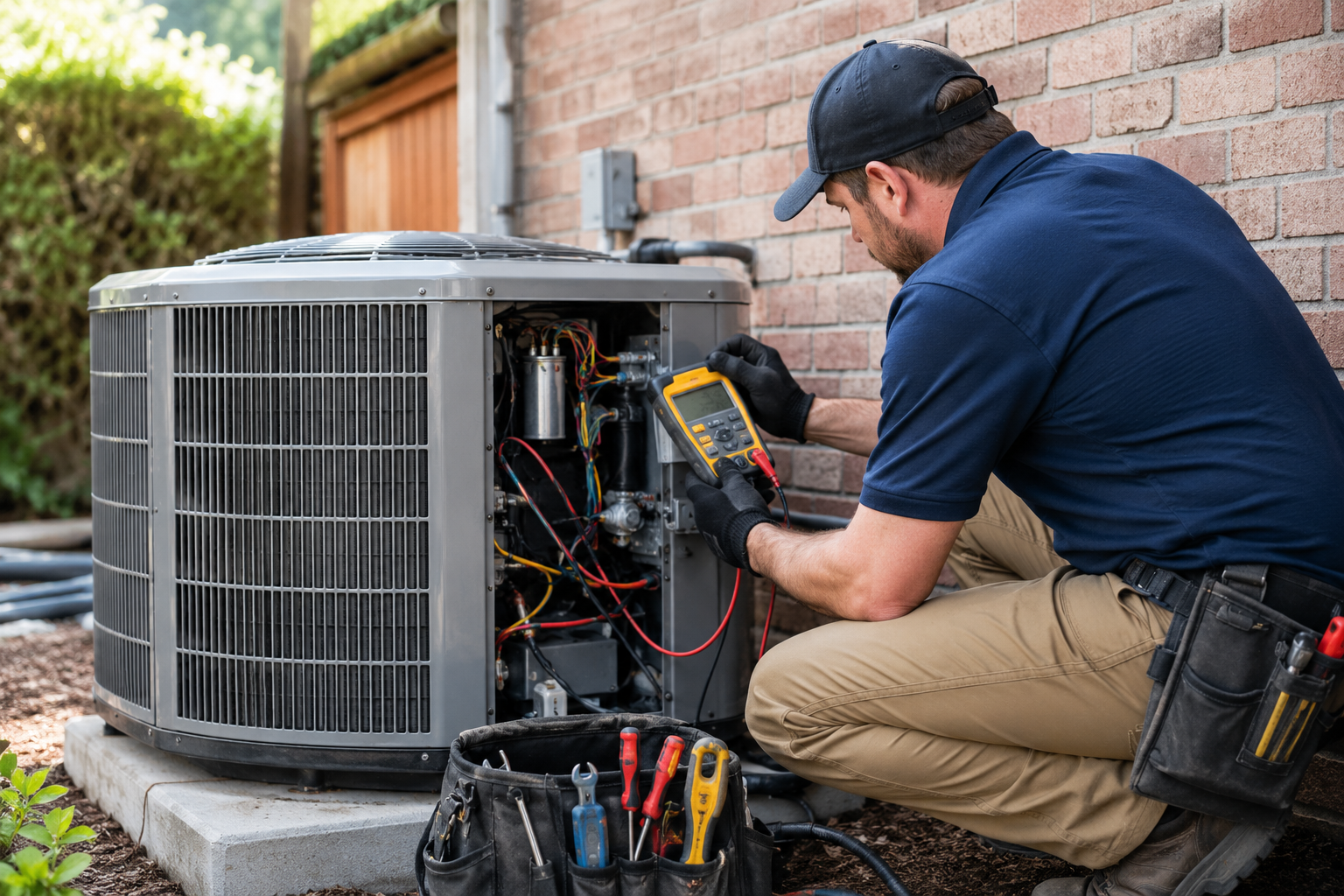
Few home-comfort problems become urgent as quickly as an air conditioner that runs but does not cool. In Houston, indoor temperatures and humidity can rise quickly when a cooling system loses capacity.
An AC that is not cooling may have a simple thermostat or filter issue. It may also have a failed capacitor, frozen coil, refrigerant leak, drainage shutdown, blower problem, damaged duct, outdoor-unit failure, or compressor concern.
This guide explains what you can check safely, what different symptoms may mean, and when to schedule professional AC repair in Houston.
First: Know When to Turn the AC Off
Turn the air conditioner off and call for service if you notice:
- A burning or melting-plastic smell
- Smoke or sparks
- Water leaking near electrical components
- A circuit breaker that trips repeatedly
- Grinding, metal-on-metal, or severe buzzing sounds
- Ice covering the indoor coil or refrigerant line
- An outdoor fan that is not spinning while the unit hums
- A rapidly overheating home with occupants who may be vulnerable to heat
Do not repeatedly reset a breaker or continue operating equipment that smells hot. Do not open electrical panels, bypass a safety switch, add refrigerant, or attempt to start a condenser fan manually.
For urgent problems, call Hage Energy at 713-560-0600 for 24/7 emergency AC service.
Safe Checks When Your Air Conditioner Is Not Cooling
Before scheduling AC repair, complete these basic checks. They may rule out a simple operating issue and give the technician useful information about the problem.
1. Check the Thermostat Mode and Temperature
Confirm that the thermostat is:
- Set to Cool
- Set below the current indoor temperature
- Not in Heat or Fan Only mode
- Displaying normally
- Using fresh batteries, if applicable
- Following the intended schedule
If the thermostat screen is blank, the cause may be dead batteries, a tripped breaker, a low-voltage problem, a condensate float switch, or a system power issue.
2. Inspect the Air Filter
A heavily clogged air filter can restrict airflow. Restricted airflow may reduce cooling, strain the blower, increase energy use, and contribute to a frozen evaporator coil.
Replace a visibly dirty disposable filter with the correct size and recommended type. Avoid installing a filter that is more restrictive than the system is designed to handle.
If the filter is clean but airflow remains weak, the problem may involve the blower, indoor coil, ductwork, return-air system, or another internal component.
3. Check Supply Vents and Return-Air Grilles
Confirm that supply vents are open and not covered by furniture, rugs, curtains, boxes, or other household items. Return-air grilles also need open space so the system can pull air back through the equipment.
Closing numerous vents usually does not solve uneven cooling. It may increase system pressure, reduce airflow, and contribute to additional comfort problems.
4. Check the Circuit Breaker Once
Look for a tripped breaker serving the indoor or outdoor AC equipment. Reset it only once.
Call for professional air conditioning service if the breaker trips again. Repeated tripping can indicate an electrical fault, failing motor, compressor problem, damaged wiring, or another condition that requires testing.
5. Look at the Outdoor AC Unit
From a safe distance, check whether the outdoor condenser is operating when the thermostat calls for cooling.
Note whether:
- The outdoor fan is spinning
- The unit is completely silent
- The unit hums without starting
- The system starts and stops quickly
- Vegetation or debris is blocking airflow
- Ice is visible on the refrigerant line
- An unusual sound or odor is present
Do not remove access panels or touch internal electrical components. The outdoor unit contains high-voltage parts and capacitors that can remain dangerous even when the system is not running.
6. Look for Ice or Water
Ice on the refrigerant line or indoor coil indicates a problem. Common causes include restricted airflow, dirty components, a blower fault, or a refrigerant issue.
Turn cooling off. You can set the thermostat fan to On to help thaw the coil, provided there is no electrical smell, smoke, or water hazard. Do not chip, scrape, or break the ice away.
Water around the indoor unit may point to a clogged condensate drain, damaged drain pan, frozen coil, condensate pump problem, or float-switch shutdown.
What Your AC Symptoms May Mean
| Symptom | Possible Causes |
|---|---|
| AC runs but blows warm air | Refrigerant problem, compressor issue, dirty coil, thermostat fault, or outdoor-unit failure |
| Very weak airflow | Dirty filter, blower problem, blocked return, frozen coil, or damaged ductwork |
| Indoor fan runs but the outdoor unit does not | Capacitor, contactor, disconnect, wiring, motor, control, or compressor problem |
| AC starts and stops repeatedly | Electrical fault, thermostat issue, dirty coil, airflow restriction, improper sizing, or refrigerant problem |
| Ice forms on the line or coil | Restricted airflow, blower fault, dirty coil, or low refrigerant |
| Water appears around the air handler | Clogged drain, damaged pan, frozen coil, or condensate pump failure |
| Some rooms stay hot | Duct leakage, poor system balance, insulation problems, solar heat gain, or inadequate airflow |
| AC will not turn on | Thermostat, breaker, float switch, wiring, transformer, control board, or power issue |
| Loud buzzing sound | Electrical component, motor, compressor, or loose-part problem |
| Musty odor | Drainage, moisture, dirty coil, duct, or indoor air quality issue |
These symptoms can help narrow the possibilities, but they do not prove which component has failed. Several AC problems can produce nearly identical symptoms.
Common Reasons an AC Runs but Does Not Cool
Dirty or Restrictive Air Filter
A filter filled with dust reduces the air moving across the indoor coil. The system may cool poorly, operate longer, consume more energy, or freeze.
Changing the filter may solve a minor restriction. A frozen coil, damaged blower motor, dirty indoor coil, or persistent airflow problem still requires professional evaluation.
Frozen Evaporator Coil
The indoor evaporator coil needs adequate airflow and correct refrigerant conditions. When the coil temperature falls too low, moisture freezes on its surface.
A frozen coil is a symptom, not the final diagnosis. Repeated freezing may involve:
- A dirty air filter
- A weak or failed blower motor
- A dirty evaporator coil
- A blocked return-air grille
- A duct restriction
- A refrigerant leak
- An incorrect refrigerant charge
- A metering-device problem
Turn the cooling system off and allow the ice to thaw. Request AC repair if the coil freezes again or the system still does not cool after thawing.
Failed Capacitor or Contactor
Capacitors help AC motors and compressors start and run. Contactors switch electrical power to the outdoor equipment. Houston heat can place substantial stress on these components.
A failed capacitor or contactor may cause:
- A humming outdoor unit
- Delayed startup
- Rapid cycling
- An outdoor fan that will not spin
- A compressor that will not start
- An AC system that stops cooling unexpectedly
These components store or control dangerous electrical energy and should be tested by a trained HVAC technician.
Refrigerant Leak or Incorrect Refrigerant Charge
Refrigerant absorbs heat inside the home and releases it outdoors. Low refrigerant can reduce cooling capacity, cause long run times, increase energy use, and contribute to coil freezing.
Refrigerant does not normally disappear through routine operation. If the system is low, the technician should evaluate it for leakage and recommend an appropriate repair.
Simply adding refrigerant without addressing a known leak may provide only temporary improvement.
Dirty Outdoor Condenser Coil
The outdoor coil must release heat. Dirt, grass clippings, leaves, cottonwood, or blocked clearance can interfere with heat transfer and increase system pressure.
Keep vegetation and loose debris away from the outdoor unit. More thorough coil cleaning should be performed according to the equipment manufacturer’s recommendations.
Outdoor Fan Failure
The condenser fan moves outdoor air across the condenser coil. If the fan stops, the system may overheat, lose cooling capacity, or shut down.
A fan that does not operate may have a failed motor, capacitor, electrical connection, control, or another component problem.
Compressor Problem
The compressor circulates refrigerant through the air conditioning system. When the compressor cannot start or operate properly, the AC may run without producing cool air.
Major compressor symptoms can resemble a less expensive capacitor, contactor, wiring, or control problem. Proper electrical and refrigerant testing is important before recommending a compressor repair or system replacement.
Clogged Condensate Drain or Float-Switch Shutdown
As a Houston AC removes humidity, water enters the condensate drain system. A blockage can fill the drain pan and activate a safety switch that shuts the equipment off.
This shutdown helps prevent water damage, but the blockage or drainage failure still needs correction.
Possible drainage problems include:
- Algae or debris inside the drain line
- A damaged drain pan
- A failed condensate pump
- An improperly sloped drain
- A frozen evaporator coil producing excess water while thawing
- A blocked secondary drain
Blower Motor Problem
The indoor blower moves conditioned air through the ductwork. A failing motor, control module, blower wheel, relay, or electrical component can reduce airflow even when the outdoor equipment is operating.
Common blower symptoms include weak airflow, unusual noises, intermittent operation, hot and cold spots, or an indoor unit that appears to run without moving enough air.
Leaking or Damaged Ductwork
Conditioned air may be escaping into the attic instead of reaching the rooms in your home. Disconnected, crushed, poorly insulated, or leaking ducts can create hot rooms, weak airflow, long run times, and high cooling bills.
Learn more about Houston air-duct testing and repair if your AC appears to be running but certain rooms remain uncomfortable.
Thermostat or Control Problem
A thermostat may display the wrong temperature, lose its program, fail to send the cooling signal, or communicate incorrectly with the equipment.
The underlying issue can also involve low-voltage wiring, a transformer, a condensate safety switch, a control board, or another system control.
The Home Is Gaining Heat Faster Than the AC Can Remove It
Not every comfort problem begins inside the air conditioner. Attic heat, inadequate insulation, duct leakage, air leakage, direct sunlight, ventilation problems, and equipment sizing can all affect cooling performance.
When the equipment appears operational but the home remains uncomfortable, a Houston home energy audit can help evaluate the entire comfort system.
Why Houston AC Problems Can Escalate Quickly
Houston cooling systems face prolonged heat, high humidity, hot attic conditions, and substantial condensate production.
These local conditions can contribute to:
- Long AC run times
- Faster air-filter loading
- Condensate drain blockages
- Frozen coils when airflow declines
- Electrical-component stress
- Outdoor-coil contamination
- Attic duct losses
- Indoor humidity complaints
- Greater discomfort when system capacity is reduced
An AC problem that seems minor during the morning may become much more noticeable during the hottest part of the afternoon. Early diagnosis may help prevent additional component damage and prolonged indoor discomfort.
Why Is My AC Blowing Warm Air?
An AC system may blow warm or room-temperature air when the indoor fan is operating but the cooling process is not working correctly.
Possible causes include:
- The thermostat is not set to Cool
- The outdoor unit has lost power
- A capacitor or contactor has failed
- The compressor is not operating
- The refrigerant charge is low
- The indoor coil is frozen
- The outdoor coil is dirty
- The reversing valve on a heat pump is malfunctioning
- A control board or thermostat is not sending the correct signal
Check the thermostat and filter first. If warm air continues, schedule professional AC service rather than continuing to run the system for hours without effective cooling.
Why Is My AC Running Constantly?
During extremely hot Houston weather, an air conditioner may run for extended periods. However, continuous operation can also indicate a performance problem.
Possible causes include:
- A dirty air filter
- Dirty indoor or outdoor coils
- Low refrigerant
- Duct leakage
- Poor attic insulation
- Air leakage around doors and windows
- An undersized system
- An aging compressor
- Incorrect thermostat settings
- Heavy solar heat gain
If the AC runs continuously but cannot reach the thermostat setting, it should be evaluated for cooling capacity, airflow, duct losses, and building-envelope concerns.
Why Is My AC Short Cycling?
Short cycling occurs when an air conditioner starts and stops more frequently than expected. The system may run for only a few minutes before shutting down and starting again.
Possible causes include:
- A dirty air filter
- A frozen evaporator coil
- A thermostat installed in a poor location
- An electrical or control problem
- An oversized air conditioner
- A refrigerant problem
- A condensate safety switch
- A failing compressor or motor
Frequent cycling can increase wear, reduce humidity control, and make indoor temperatures less consistent.
Why Is My Upstairs Hotter Than Downstairs?
Warm upstairs rooms are common in Houston homes, but a large temperature difference may indicate an airflow, duct, insulation, or system-design problem.
Possible causes include:
- Leaking attic ductwork
- Poor duct balance
- Inadequate return-air capacity
- Insufficient attic insulation
- High solar heat gain
- A weak blower
- Closed or restricted vents
- Improper equipment sizing
- A single thermostat controlling multiple levels
Repairing the AC equipment alone may not solve this problem if the primary cause is duct leakage, insulation, or system balance.
Hage Energy can evaluate related comfort concerns through air-duct services, attic insulation, and whole-home energy audits.
Why Is My Houston Home Still Humid With the AC Running?
An air conditioner must remove both heat and moisture. A home can feel uncomfortable even when the thermostat shows a reasonable temperature if indoor humidity remains high.
Possible causes include:
- The AC is short cycling
- The equipment is oversized
- Airflow is too high or too low
- The evaporator coil is dirty
- The refrigerant charge is incorrect
- The condensate system is not draining properly
- Outside air is entering through leaks
- Ductwork is leaking in the attic
- The thermostat or equipment settings are incorrect
Persistent humidity can also contribute to musty odors, condensation, microbial growth concerns, and reduced indoor comfort.
Learn more about Houston indoor air quality solutions if humidity, odors, allergens, or airborne particles are affecting your home.
When to Request Professional AC Repair
Schedule professional air conditioning repair when:
- The basic thermostat and filter checks do not restore cooling
- Ice returns after the coil thaws
- The system appears to be low on refrigerant
- The outdoor equipment does not start
- A circuit breaker trips again
- Water continues to leak
- The AC makes an electrical or mechanical noise
- The home remains excessively humid
- Airflow stays weak
- The system cannot reach the selected temperature
- The same problem has occurred before
- The equipment needs a component or wiring repair
A trained technician can test operating temperatures, electrical components, motors, controls, airflow, drainage, refrigerant performance, and other relevant conditions.
What Hage Energy Checks During an AC Diagnostic Visit
The exact diagnostic process depends on the symptoms and equipment. A professional AC service visit may include checking:
- Thermostat settings and control operation
- Supply and return-air temperatures
- Air-filter condition
- Blower operation
- Electrical connections
- Capacitors and contactors
- Condenser fan motor operation
- Compressor startup and performance
- Indoor and outdoor coil condition
- Refrigerant performance
- Condensate drainage
- Float switches and safety controls
- Visible duct and airflow conditions
- System cycling
- Electrical and mechanical safety concerns
After identifying the cause, the technician explains the findings and recommended repair.
Can AC Maintenance Prevent a No-Cooling Call?
Not every breakdown is preventable, but regular maintenance can identify dirty coils, weak electrical components, clogged drains, airflow restrictions, worn parts, and other developing conditions.
Preventive AC maintenance may help:
- Reduce unexpected cooling failures
- Identify weak components before peak summer demand
- Keep condensate drains flowing
- Support proper airflow
- Maintain cooling performance
- Reduce unnecessary energy use
- Support manufacturer warranty requirements
- Extend the useful life of the equipment
Explore Hage Energy’s Houston HVAC maintenance plans for regular system care, priority-service options, and help reducing unexpected breakdowns.
Frequently Asked Questions
Why is my AC blowing air but not cooling?
The indoor fan may be operating while the outdoor equipment, compressor, refrigerant circuit, or cooling controls are not working correctly. Restricted airflow or a frozen coil can create the same symptom.
Why is my outside AC unit not turning on?
Possible causes include a failed capacitor, contactor, disconnect, breaker, wiring connection, thermostat signal, control board, fan motor, or compressor.
Can a dirty filter stop my AC from cooling?
Yes. A severely restricted filter can reduce airflow, lower cooling capacity, strain the blower, increase energy use, and contribute to an evaporator coil freezing.
Should I turn off an AC with a frozen line?
Yes. Turn cooling off and allow the system to thaw. Do not scrape or break away the ice. Request service if the system freezes again or cooling does not return.
Why does my AC work at night but not during the afternoon?
The system may be losing capacity under peak heat because of dirty coils, airflow problems, refrigerant conditions, duct leakage, insulation deficiencies, equipment sizing, or mechanical deterioration.
Why is my AC running but the house is still hot?
The system may have reduced cooling capacity, weak airflow, duct leakage, poor insulation, excessive heat gain, incorrect sizing, or a thermostat problem. A full diagnostic evaluation may be needed to identify whether the issue is inside the equipment or elsewhere in the home.
Why is my Houston home still humid with the AC running?
Possible causes include short cycling, oversized equipment, airflow problems, drainage issues, thermostat settings, duct leakage, outside-air infiltration, or reduced cooling performance.
Can low refrigerant make an AC blow warm air?
Yes. Low refrigerant can reduce cooling capacity and contribute to coil freezing. Because refrigerant operates in a sealed system, a low charge may indicate a leak or previous service problem.
Can I add refrigerant to my air conditioner myself?
No. Refrigerant service requires proper training, tools, handling procedures, and system testing. Adding refrigerant without diagnosing the cause can damage the equipment and fail to correct the underlying problem.
How long should I wait for a frozen AC coil to thaw?
Thawing time varies depending on the amount of ice, indoor temperature, airflow, and equipment condition. It may take several hours. Do not restart cooling until the ice has melted, and request service if freezing returns.
Why does my AC breaker keep tripping?
Repeated breaker trips may indicate damaged wiring, a failing motor, compressor trouble, a short circuit, excessive electrical load, or another electrical problem. Do not continue resetting the breaker.
How do I find reliable AC repair near me in Houston?
Choose a local HVAC company that provides proper diagnostics, explains repair options, services your equipment brand, maintains verifiable business information, and understands Houston heat, humidity, drainage, airflow, and ductwork concerns.
Houston AC Repair From Hage Energy
Hage Energy provides air-conditioning diagnostics, AC repair, emergency service, maintenance, airflow solutions, duct services, insulation, indoor air quality improvements, and energy-efficiency services throughout Greater Houston.
Phone: 713-560-0600
We serve Houston Heights, River Oaks, Memorial, the Energy Corridor, Bellaire, West University Place, Katy, Sugar Land, Missouri City, Stafford, Richmond, Spring, Clear Lake, League City, and surrounding Greater Houston communities.
Still Not Cooling? Schedule Houston AC Repair
Avoid replacing parts based on guesswork. Let Hage Energy test the system, identify the cause, and explain the appropriate repair.
Book AC repair in Houston or call 713-560-0600.
FAQ Context
What are the first things to check if my AC is not cooling?
First, confirm your thermostat is set to 'Cool' and below the current room temperature. Next, inspect the air filter for clogs and ensure all supply vents and return grilles are open and unobstructed. You should also check if the circuit breaker for the AC unit has tripped.
When should I turn my AC off and call for emergency service?
Immediately turn the system off and call a professional if you notice a burning smell, see smoke, hear grinding or severe buzzing sounds, find ice covering the refrigerant line, or if the circuit breaker trips repeatedly. These signs can indicate a serious electrical or mechanical fault.
Is it safe to keep resetting my AC's circuit breaker if it trips?
No. You should only reset a tripped circuit breaker once. If it trips again, it signals an underlying electrical problem, such as a failing motor or damaged wiring, that requires professional service. Repeatedly resetting it can be a fire hazard.