

AC Leaking Water Inside Your House? Causes, Warning Signs and What to Do
AC leaking water inside? Learn the common causes, from clogged drains to frozen coils, and what to do immediately to prevent costly water damage.
Hage Energy
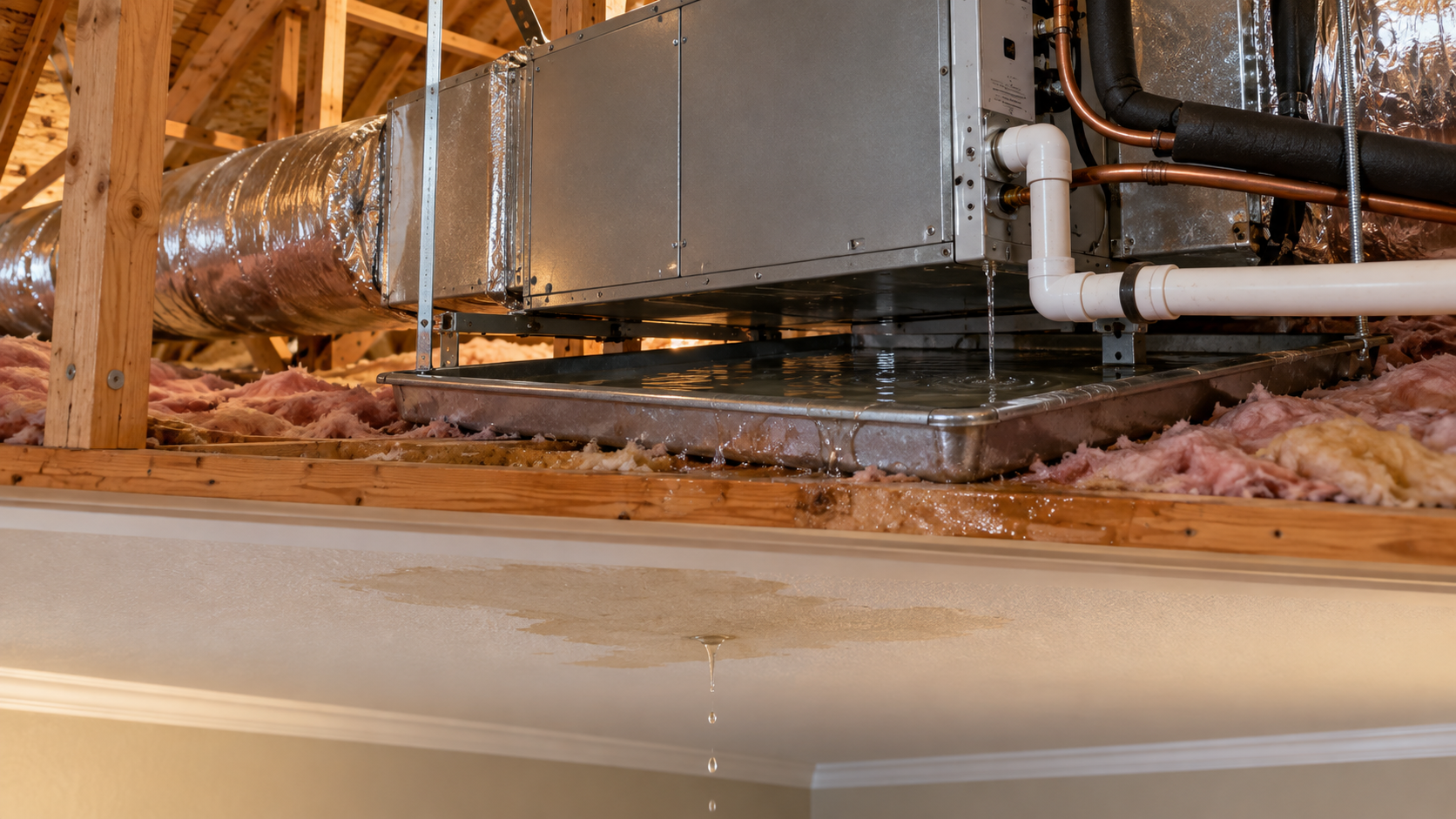
Finding water around your air conditioner, dripping through a ceiling, or collecting on the floor can be alarming. In many homes, the source is not a plumbing or roof leak at all. It may be the air-conditioning system.
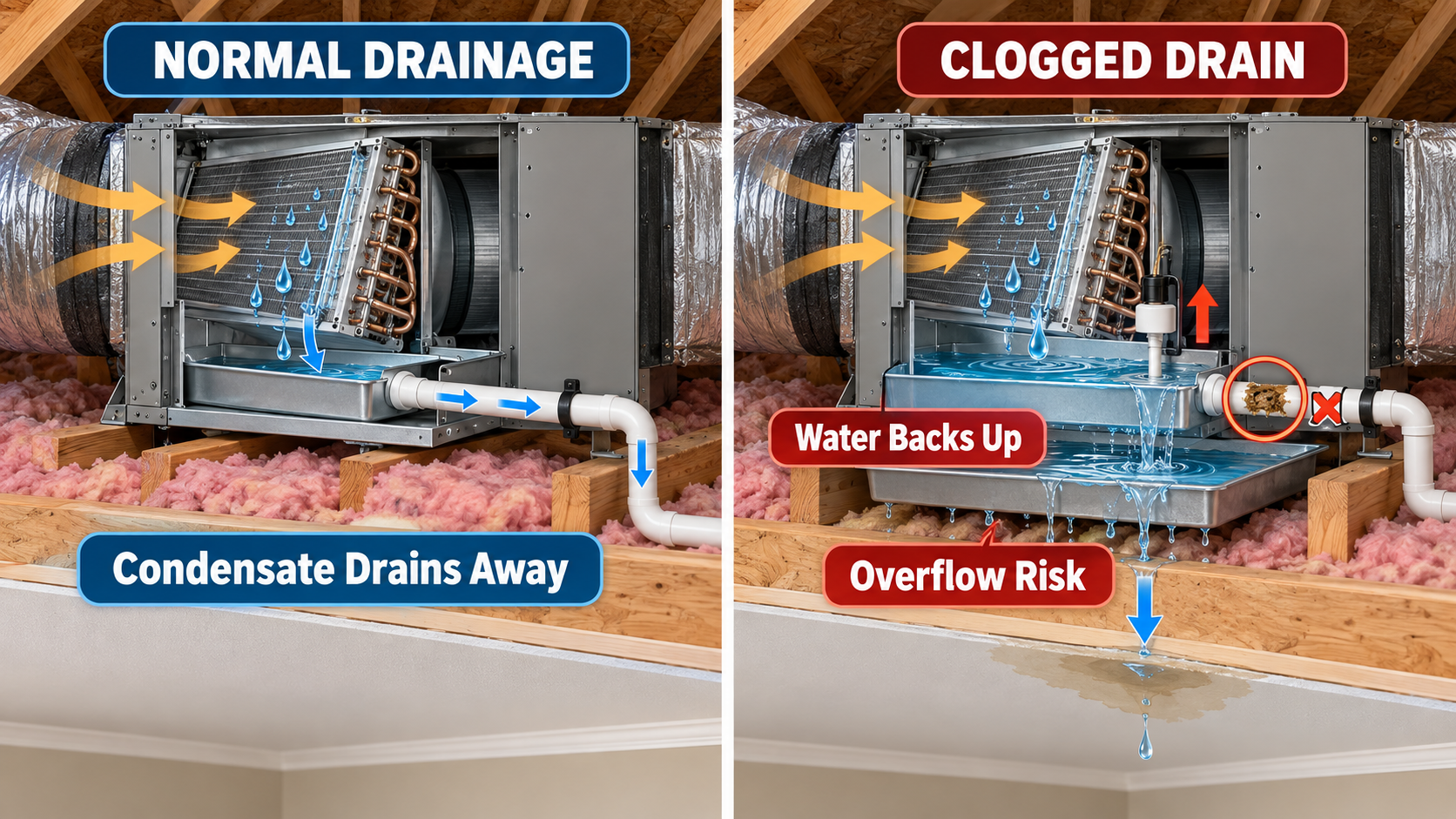
One of the most common reasons an AC leaks water indoors is a clogged condensate drain line. When the moisture your air conditioner removes from the indoor air cannot drain properly, water can back up into the drain pan and eventually overflow.
A clogged drain is not the only possibility. Frozen evaporator coils, damaged drain pans, failed condensate pumps, drainage installation problems, and other AC issues can produce similar symptoms.
If water is actively leaking inside the house, addressing it promptly can help limit damage to ceilings, insulation, flooring, walls, and nearby belongings.
What Should You Do First If Your AC Is Leaking Water?
If the air conditioner is actively dripping water indoors or water is coming through the ceiling, the immediate goal is to prevent the situation from becoming worse.
- Turn the cooling system off at the thermostat. If the AC continues operating, it can continue removing moisture from the air and producing additional condensate.
- Avoid electrical hazards. Do not touch electrical equipment, wiring, outlets, fixtures, or breaker panels while standing in water.
- Move belongings away from the affected area. Protect furniture, electronics, rugs, and other items when it is safe to do so.
- Stay away from a sagging ceiling. Water-soaked drywall can lose strength and may fall.
- Remove accessible standing water safely. Towels or a wet/dry vacuum may help on a solid floor, but water inside ceilings, insulation, or walls can require additional drying.
- Have the AC problem diagnosed. Do not assume the issue is resolved simply because the visible dripping stops after the system is turned off.
Why Does an Air Conditioner Create Water?
Your air conditioner does more than lower the temperature inside your home.
As warm indoor air passes across the cold evaporator coil, moisture in that air condenses on the coil.
That water normally falls into a condensate drain pan and travels through a drain line that carries it away from the HVAC equipment.
This is a normal part of air-conditioning operation.
What is not normal is seeing that water collect around the air handler, overflow onto the floor, or appear through a ceiling.
A Clogged AC Drain Line Is a Common Cause
Condensate drain lines can become restricted by buildup over time.
Dust, biological growth, debris, and material entering the drainage system can reduce or eventually block water flow.
Once the drain can no longer move condensate away quickly enough, water may begin collecting in the primary drain pan.
Depending on the HVAC installation, that can lead to:
- Standing water in the primary drain pan
- Water entering the secondary or emergency pan
- A float switch shutting the AC system off
- Water around the indoor air handler
- Wet attic insulation
- Ceiling stains
- Water dripping through drywall
- Damage to flooring or nearby materials
- Musty odors near the HVAC equipment
Hage Energy has encountered this type of problem during Houston AC service calls, including drainage restrictions that caused water to back up into primary and secondary drain pans and created a risk of ceiling and drywall damage.
Why Is My AC Leaking Through the Ceiling?
A ceiling leak can occur when the indoor HVAC equipment is installed in the attic.
If condensate backs up or escapes the drain system, water may reach the attic floor, insulation, framing, or drywall below.
The first sign inside the living space may be:
- A yellow or brown ceiling stain
- Bubbling paint
- Damp drywall
- A soft area in the ceiling
- Water dripping from one location
This does not automatically mean the roof is leaking.
If the problem appears while the air conditioner is operating or directly below attic HVAC equipment, the condensate system should be one of the things investigated.
Why Did My AC Suddenly Shut Off?
A sudden shutdown can sometimes be connected to the condensate drainage system.
Many HVAC installations use a float switch or overflow safety switch designed to stop cooling when water rises beyond a certain level.
If the drain becomes clogged and the pan fills, the safety switch may shut down the system before a larger overflow develops.
That means an AC that suddenly stops working during hot, humid weather is not necessarily experiencing an electrical or compressor failure.
A drainage safety device may be doing exactly what it was designed to do.
Other Reasons an AC Can Leak Water Indoors
Although a clogged drain line is a common cause, it is not the only explanation.
Damaged or Corroded Drain Pan
The condensate pan collects moisture beneath the evaporator coil.
Over time, an older pan may crack, corrode, rust, or otherwise deteriorate.
If the pan can no longer contain water properly, condensate may escape before reaching the drain line.
Frozen Evaporator Coil
A frozen evaporator coil can produce a substantial amount of water when the ice begins to melt.
Low refrigerant, restricted airflow, dirty coils, blower problems, or other system issues can contribute to evaporator-coil freezing.
If you see ice on the coil or accessible refrigerant lines, turn the cooling system off and have the cause evaluated.
Severely Dirty Air Filter
A clogged filter can restrict airflow through the HVAC system.
Under certain conditions, restricted airflow can contribute to evaporator-coil icing.
When the ice melts, the resulting water may overwhelm the drainage system or appear around the equipment.
Condensate Pump Failure
Some HVAC systems use a condensate pump when water cannot drain entirely by gravity.
If the pump fails, loses power, becomes clogged, or develops another problem, water can collect and eventually overflow.
Drain-Line Installation Problems
Condensate needs a properly configured drainage path.
Incorrect slope, sagging drain piping, improperly configured traps, poor connections, or other installation issues can restrict drainage even when the pipe is not completely clogged.
Overflow Safety Problem
A float switch helps reduce the risk of water damage but does not eliminate every possible overflow.
Safety devices can fail, become improperly positioned, or be absent from some installations.
The drainage system and its overflow protection should be considered together.
Can You Unclog an AC Drain Line Yourself?
Homeowners may be able to perform limited visual checks, but the correct approach depends on how the drainage system is configured.
You can safely look for obvious conditions such as:
- Standing water in an accessible secondary drain pan
- Visible water around the air handler
- A dirty air filter
- Ice on accessible refrigerant piping
- A float switch that appears to have shut the system down
- A visibly backed-up drain termination point
Avoid taking apart HVAC equipment or working around electrical components when water is present.
If you are unsure where the blockage is located, the problem keeps returning, or water has already entered the ceiling or floor, professional diagnosis is the safer approach.
Why Clearing the Drain May Not Be the Entire Repair
If the condensate line is clogged, restoring drainage is an important part of the repair.
But it is also worth understanding why the backup occurred and whether anything else needs attention.
A technician may need to consider:
- Drain-line blockage
- Drain slope
- Trap configuration
- Drain-pan condition
- Overflow controls
- Condensate pump operation
- Evaporator-coil condition
- Airflow
- Evidence of coil freezing
If the water came from a frozen evaporator coil, for example, clearing the condensate line alone would not correct the condition that caused the coil to freeze.
Why Houston Homes Can See AC Drain Problems
Houston air conditioners operate through a long cooling season and frequently remove substantial moisture from indoor air.
Every bit of moisture removed by the evaporator coil has to go somewhere.
The condensate pan and drain system are responsible for carrying that water away from the equipment.
When an air handler is located in an attic above finished living space, reliable drainage and overflow protection become particularly important.
A seemingly minor drain restriction can eventually become a ceiling or flooring problem if water escapes the HVAC system.
Signs You Should Call for AC Service
Consider scheduling professional AC service when:
- Water is actively leaking from the HVAC equipment
- Water is dripping through a ceiling
- The secondary drain pan contains water
- The AC repeatedly shuts off because of a float switch
- The condensate line repeatedly clogs
- The evaporator coil or refrigerant line is frozen
- You see water around electrical components
- A ceiling is becoming stained, soft, or saturated
- The system stops cooling properly at the same time the leak appears
Recurring water problems deserve particular attention because repeatedly clearing the visible symptom may miss an underlying drainage, airflow, equipment, or installation problem.
What Can Hage Energy Check?
When water appears around an AC system, Hage Energy can evaluate the equipment and condensate drainage components to determine where the moisture is coming from.
Depending on the system and symptoms, that evaluation may include:
- Primary condensate drain line
- Drain-line restrictions
- Primary and secondary drain pans
- Drain slope and configuration
- Condensate traps and connections
- Float switches
- Condensate pumps
- Evaporator-coil condition
- Evidence of icing
- Air-filter condition
- Airflow
- Refrigeration-system performance when appropriate
The objective is to identify the actual cause rather than treating visible water as the entire problem.
How to Help Prevent Future Condensate Drain Backups
Routine HVAC maintenance can help identify drainage problems before they cause visible water damage.
Homeowners should also pay attention to warning signs such as unexplained AC shutdowns, recurring water in an auxiliary pan, ceiling discoloration below attic equipment, musty odors, or moisture around the indoor unit.
Keeping the air filter properly maintained can also help reduce airflow problems and the amount of debris circulating through the HVAC system.
Hage Energy's AC maintenance service includes condensate drain cleaning as part of maintaining the cooling system.
AC Leaking Water in Your Houston Home?
A water leak from your HVAC system should not be ignored, particularly when the equipment is located in an attic or above finished living space.
The cause may be a clogged condensate drain, overflowing pan, frozen evaporator coil, condensate-pump problem, damaged pan, or another AC issue.
Hage Energy provides residential AC diagnostics and repair throughout Greater Houston.
Call Hage Energy at 713-560-0600 or request AC service online if your air conditioner is leaking water inside your home.
Frequently Asked Questions About AC Water Leaks
Why is my AC leaking water inside my house?
A clogged condensate drain is one of the most common causes. Other possibilities include a damaged drain pan, frozen evaporator coil, failed condensate pump, airflow problem, or incorrectly configured drainage system.
Can a clogged AC drain cause water to come through the ceiling?
Yes. If the indoor HVAC equipment is in the attic, backed-up condensate can overflow onto attic materials and eventually soak the ceiling drywall below.
Should I turn the AC off if it is leaking water?
Turning the cooling system off is a sensible first step when water is actively leaking indoors. Continuing to operate the AC can continue producing condensate and may worsen an existing overflow.
Why is there water in my secondary AC drain pan?
Water in a secondary or emergency pan often indicates that the primary drainage system is not handling condensate properly. A clogged primary drain, damaged pan, drainage problem, or other condition should be investigated.
Why did my AC stop working when the drain clogged?
A condensate float switch may have shut the cooling system off because water reached an unsafe level. The shutdown can help prevent a larger overflow.
Can a dirty filter cause an AC to leak water?
A severely restricted filter can reduce airflow and contribute to evaporator-coil freezing. When that ice melts, excess water can appear around the equipment. A dirty filter is one possible contributing factor rather than the only cause of an AC water leak.
Does clearing the condensate drain always solve the problem?
No. Clearing a blockage helps when the drain itself is the cause, but a damaged drain pan, frozen coil, failed pump, drainage configuration issue, or another HVAC problem may require additional repair.
How can I help prevent my AC drain line from clogging again?
Routine AC maintenance, condensate drain inspection and cleaning, proper filter maintenance, and prompt attention to recurring drainage problems can reduce the likelihood of another backup.
FAQ Context
Why does an air conditioner create water?
As warm indoor air passes over the cold evaporator coil, moisture in the air condenses on the coil. This water normally collects in a drain pan and is carried away through a drain line as part of the standard cooling process.
What is a common cause of an AC leaking water indoors?
A clogged condensate drain line is a very common cause. When dust, debris, or biological growth restricts the line, water can back up into the drain pan and eventually overflow into your home.
What should I do first if my AC is leaking water?
Turn the cooling system off at the thermostat immediately to stop it from producing more condensate. Avoid electrical hazards, move belongings away from the water if it is safe, and stay away from any sagging, water-soaked ceilings.